


Why Pelletize Chicken Litter?
Poultry farming produces large quantities of litter throughout each production cycle. This material commonly consists of chicken manure mixed with bedding materials such as rice husks, wood shavings, straw, or other agricultural residues. Depending on farm management practices, it may also contain feathers, spilled feed, and other organic matter.
Instead of treating used litter simply as waste, it can be processed into an organic fertilizer product after suitable treatment. Pelletizing is one way to improve the physical characteristics of composted poultry litter, making it easier to handle, transport, store, and apply.
However, turning chicken litter into stable pellets is not simply a matter of feeding fresh material into a pellet mill. Moisture, decomposition, particle size, bedding composition, nutrient content, and sanitation all need to be considered.
So, what does a practical chicken litter pellet production process look like? Understanding each stage can help farmers, fertilizer producers, and project planners make more informed decisions about equipment and plant design.
What Is Chicken Litter Made Of?
Chicken litter is not a completely uniform raw material. Its composition depends on the type of poultry house, bedding material, stocking density, feeding system, ventilation, watering equipment, and length of time the litter remains in the house.
The manure itself contains organic matter and nutrients such as nitrogen, phosphorus, and potassium. Bedding materials contribute additional carbon and affect the physical structure of the litter.
For example, rice husks can make the material relatively fibrous and coarse, while wood shavings may behave differently during crushing and pelletizing. Litter containing excessive bedding may therefore require more intensive size reduction before pellet production.
This variability is one reason why raw material testing is useful before designing a complete processing line.
Can Fresh Chicken Litter Be Pelletized Directly?
Fresh chicken litter generally should not be treated as ready-to-use fertilizer simply because it can be mechanically compressed.
Fresh manure can contain considerable moisture and biologically active material. Depending on the source and intended application, appropriate composting, stabilization, or other treatment may be necessary before the material is processed into a finished fertilizer product.
Composting provides a controlled environment in which microorganisms break down organic matter. During this process, temperature, moisture, oxygen availability, and turning frequency can influence the rate and quality of decomposition.
The exact treatment requirements depend on local agricultural regulations and the intended use of the finished fertilizer. Pelletizing is therefore better understood as a downstream physical processing step rather than a substitute for proper manure treatment.
Why Is Moisture Such an Important Factor?
Moisture has a direct influence on the mechanical behavior of organic fertilizer materials.
If chicken litter is too wet, it may become sticky and difficult to feed consistently into processing equipment. Excessive moisture can also increase drying requirements and energy consumption.
If the material is excessively dry, it may generate more dust and may not compact as effectively under certain conditions.
There is no universal moisture value that guarantees good pellet quality for every formulation. The appropriate condition depends on the composition of the litter, the degree of composting, particle size, pellet mill configuration, and desired product characteristics.
For this reason, measuring moisture is more reliable than judging it simply by appearance or touch.
How Should Chicken Litter Be Prepared Before Pelletizing?
Preparation normally begins with removing unwanted materials.
Stones, metal pieces, plastic, ropes, and other foreign objects should be separated before the material reaches crushing or pelletizing equipment. Such contaminants can damage mechanical components and reduce the quality of the finished fertilizer.
After cleaning, the litter may need to be crushed or screened. The purpose is to create a relatively uniform feedstock that can move through the production system consistently.
The material does not necessarily need to be ground into an extremely fine powder. Excessive grinding can increase electricity consumption without providing a corresponding improvement in pellet quality.
The ideal particle size should instead be determined according to the physical characteristics of the compost and the requirements of the pelletizing equipment.
What Does a Chicken Litter Pellet Production Line Include?
A typical processing system can contain several stages:
Raw material receiving → composting or stabilization → crushing → drying if necessary → screening → mixing → pelletizing → cooling → screening → packing → storage
Not every project needs every stage.
If the composted chicken litter already has a suitable moisture level and particle size, the drying or crushing requirements may be relatively limited. On the other hand, wet material with large bedding particles may require more extensive pretreatment.
A commercial project may also include automatic conveyors, storage bins, weighing equipment, dust collection systems, and automatic packaging.
The best configuration is therefore determined by the raw material and production target rather than by a standard equipment list.
How Does Pelletizing Work?
At the center of the process is mechanical compression.
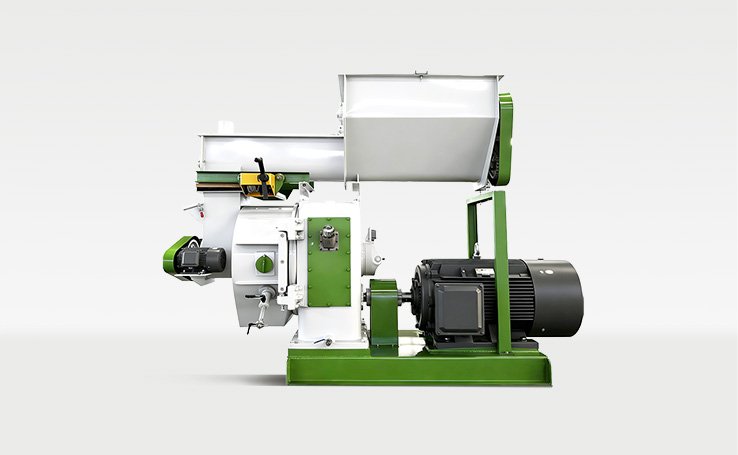
Prepared organic material enters the pellet mill and is forced through openings in a die. Pressure and friction compact the particles into cylindrical shapes. A cutting mechanism then separates the compressed material into individual pellets.
During compression, heat can be generated through friction and mechanical pressure. Depending on the composition of the material, this may contribute to particle bonding.
Chicken litter behaves differently from sawdust or other woody biomass. Its physical properties depend heavily on manure content, bedding, decomposition, and moisture.
Consequently, equipment settings that work well for one organic fertilizer formulation may not produce the same results with another.
What Factors Affect Pellet Quality?
Pellet quality depends on several variables rather than one single machine parameter.
Important factors include:
- Moisture content
- Particle size
- Raw material composition
- Feeding rate
- Die specifications
- Compression conditions
- Roller condition
- Cooling efficiency
- Screening performance
Pellets that are too soft may generate excessive fines during transportation. Pellets that are too dry or poorly formed may also break apart during handling.
The objective should therefore be a stable balance between durability, moisture, bulk density, nutrient consistency, and ease of application.
Quality testing should be conducted regularly because the characteristics of chicken litter can change between batches.
What Type of Pellet Mill Is Suitable?
Equipment selection should begin with the characteristics of the prepared material and the desired output.
For relatively small farms, a compact pelletizing system may be sufficient. Larger commercial fertilizer projects may require continuous feeding, automatic conveying, higher-capacity pellet mills, and integrated cooling and screening systems.
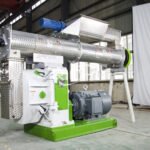
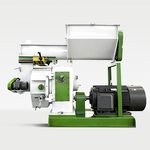
A chicken litter pellets processing machine should be evaluated as part of this complete process rather than as an isolated piece of equipment.
The nominal capacity of a pellet mill is also only one consideration. Actual output can change according to moisture, particle size, formulation, die specifications, and operating conditions.
When comparing equipment, it is therefore useful to ask whether the quoted capacity was obtained using a raw material similar to the one available locally.
Is a Ring Die Pellet Mill Suitable for Compost?
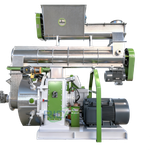
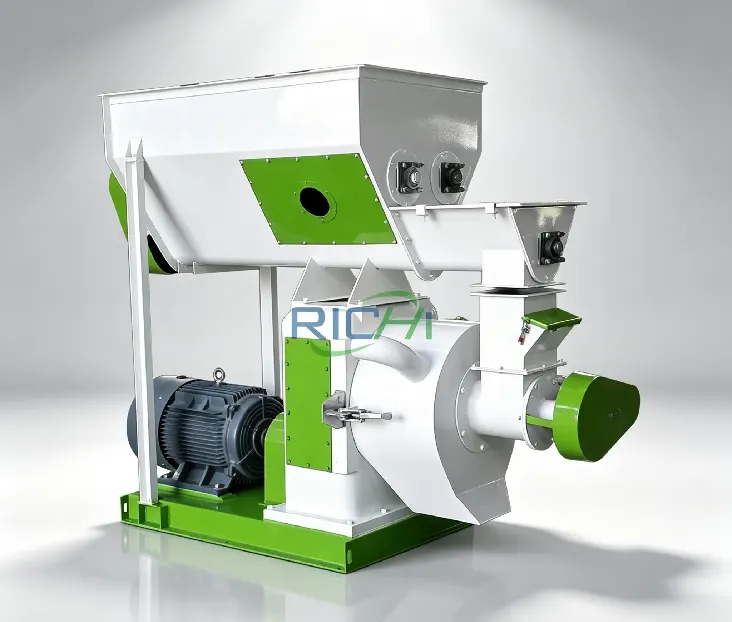
Ring die pellet mills are commonly considered for continuous pellet production because of their structure and feeding arrangement.
For example, a 2t/h ring die compost pellet mill may be considered when a project targets around two tons of compost pellets per hour under appropriate operating conditions.
Related Post: https://commercialpelletmill.com/compost-pellet-machine/
However, the stated capacity should not automatically be interpreted as the guaranteed output for every type of chicken litter.
If the raw material contains excessive moisture, large bedding particles, or an inconsistent composition, actual production can be lower than the nominal machine rating.
The upstream and downstream equipment must also be capable of handling the same throughput. A pellet mill cannot maintain high production if the dryer, cooler, conveyor, or packaging system becomes a bottleneck.
Does Chicken Litter Need Drying?
Drying requirements depend mainly on the moisture content after composting or stabilization.
Some composted litter may naturally reach a moisture level that is reasonably close to the condition required for pelletizing. In such cases, a large thermal dryer may not be necessary.
Other materials may retain substantial moisture and require mechanical or thermal drying.
Drying can be one of the most energy-intensive stages in an organic fertilizer production line. It is therefore useful to control moisture before the material enters the dryer.
Covered composting areas, good drainage, and protection from rain can help prevent the material from absorbing unnecessary water.
When a dryer is required, its capacity should be calculated according to actual moisture removal requirements rather than simply matching the pellet mill’s nominal capacity.
Why Is Mixing Sometimes Necessary?
Chicken litter naturally varies in composition. A producer may sometimes combine it with other organic materials to adjust moisture, structure, nutrient content, or pelletizing characteristics.
For example, a relatively dry organic residue may be blended with wetter compost to create a more manageable feedstock.
Mixing can also help distribute nutrients more evenly throughout the final product.
However, blending should have a defined purpose. Adding materials without considering their moisture and nutrient characteristics can create an inconsistent fertilizer.
A proper mixing system should provide sufficient residence time and agitation to achieve a reasonably uniform blend before pelletizing.
What Happens After the Pellets Leave the Mill?
Pellets are generally not ready for packaging immediately after leaving the pellet mill.
Fresh pellets can contain residual heat and may still be physically unstable. A cooling stage helps reduce their temperature and improve their condition for subsequent handling.
The cooling process should be matched to the actual production rate. If the cooler is too small, hot pellets may accumulate and slow down the entire line.
After cooling, the pellets can pass through a screening system.
Screening separates acceptable pellets from fines and broken material. Depending on the process design, fines can often be recycled back into the pelletizing stage.
This can improve material utilization and reduce the amount of product lost during processing.
How Should Finished Fertilizer Pellets Be Stored?
Storage conditions have a direct effect on pellet stability.
Organic fertilizer pellets can absorb moisture from their surroundings. If they are exposed to rain or high humidity, they may soften, break apart, or increase in fines.
A suitable storage area should therefore have a dry floor and protection against water infiltration. For bagged products, packaging should provide adequate protection against environmental moisture.
Bulk storage requires similar attention. The storage system should also provide enough space for production peaks and shipment delays.
For commercial operations, storage capacity should be calculated according to production volume, shipping frequency, and expected inventory levels.
What Quality Parameters Should Be Tested?
A fertilizer pellet should be evaluated according to its intended use.
Common physical and chemical parameters include:
- Moisture content
- Pellet durability
- Bulk density
- Pellet dimensions
- Amount of fines
- Organic matter
- Nitrogen
- Phosphorus
- Potassium
- Ash content
Nutrient analysis is especially important for organic fertilizers.
The nutrient concentration of chicken litter is not fixed. It can vary according to poultry feed, bedding, bird age, moisture, and farm management practices.
Therefore, laboratory analysis can provide more useful information than relying on a general nutrient value from another farm.
Can Chicken Litter Pellets Be Used Directly on Cropland?
The appropriate application of poultry-manure-based fertilizer depends on its treatment, composition, and local regulations.
Properly processed organic fertilizer can provide nutrients and organic matter to agricultural soils, but application rates should be determined according to crop requirements, soil conditions, nutrient analysis, and applicable environmental rules.
Applying too much manure-based fertilizer can create nutrient losses and environmental problems.
For this reason, pellet production should be connected with responsible fertilizer management. Producing a convenient pellet does not remove the need for appropriate agronomic application.
What Determines the Capacity of a Complete Plant?
The production capacity of a fertilizer pellet plant is determined by the complete process, not just the pellet mill.
Consider a hypothetical line where the pellet mill can process two tons per hour. If the dryer can prepare only one ton per hour, the practical plant capacity will be constrained by the dryer.
The same principle applies to crushing, cooling, screening, conveying, and packaging.
Capacity planning should therefore examine:
- Raw material supply
- Initial moisture
- Required moisture reduction
- Crushing capacity
- Pellet mill capacity
- Cooling capacity
- Screening capacity
- Packaging speed
- Storage capacity
This approach helps prevent one oversized machine from being combined with several undersized stages.
How Can Energy Consumption Be Reduced?
Energy consumption deserves particular attention when wet organic materials are being processed.
The most effective approach is often to avoid unnecessary moisture in the first place. Proper storage and compost management can reduce the amount of water that eventually needs to be removed.
Grinding also consumes electricity. Therefore, particle size should be controlled according to actual pelletizing requirements rather than grinding everything as finely as possible.
Regular maintenance can further improve energy efficiency. Worn bearings, rollers, dies, belts, and other components may increase mechanical resistance or reduce production stability.
Monitoring power consumption over time can help identify unusual changes that may indicate equipment wear or process problems.
What Safety Issues Should Be Considered?
Organic fertilizer processing involves moving machinery, dust, heat, and biological materials.
Workers should receive appropriate training and use protective equipment suitable for their tasks.
Dust collection and ventilation can be particularly important around crushing, screening, and conveying areas.
All rotating equipment should have suitable guards, while emergency stop systems should remain accessible.
If a thermal dryer is installed, additional precautions are needed around hot air and combustion equipment.
Good housekeeping should also be part of daily operations. Organic dust and spilled material should not be allowed to accumulate unnecessarily around machinery.
Safety considerations should be incorporated into the plant layout from the beginning.
How Large Should a Chicken Litter Pellet Plant Be?
The appropriate plant size depends on the amount of litter available and the expected demand for the finished fertilizer.
A poultry farm producing a relatively small amount of litter may not be able to keep a large commercial pellet line operating efficiently.
A centralized project collecting litter from multiple farms may have access to a much larger and more stable raw material supply.
Seasonality should also be considered. Although poultry production can be relatively continuous, changes in farm operations, litter replacement schedules, and transportation can affect supply.
Before choosing equipment, it is useful to calculate the average daily litter volume as well as the minimum and maximum expected supply.
What Information Should Be Prepared Before Buying Equipment?
A detailed equipment inquiry should contain as much raw material information as possible.
Useful data includes:
- Type of poultry litter
- Bedding material
- Initial moisture
- Composting condition
- Particle size
- Daily raw material supply
- Target production capacity
- Desired pellet diameter
- Packaging method
- Final fertilizer application
- Available workshop space
- Local power supply
Photographs can provide useful background information, but representative samples are often more valuable for technical testing.
If possible, testing the actual raw material can help determine whether crushing, drying, mixing, and pelletizing equipment are all necessary.
Why Is Pilot Testing Useful?
Organic waste is naturally variable, so pilot testing can reduce uncertainty before a large investment is made.
Testing can help determine suitable moisture conditions, pellet durability, feeding stability, die configuration, and expected output.
It can also reveal whether the proposed process generates excessive fines or requires additional material preparation.
For projects using multiple raw materials, testing different formulations can help identify a stable combination before full-scale production begins.
This is particularly useful when the raw material supply changes seasonally.
What Should You Ask an Equipment Supplier?
A technical discussion with an equipment manufacturer should cover more than the machine’s purchase price.
Useful questions include:
- What type of compost has been used for testing?
- What moisture range is recommended?
- What is the realistic production capacity?
- Which die diameters are available?
- How often do rollers and dies require maintenance?
- What cooling system is recommended?
- Is a dryer necessary?
- How are fines recycled?
- What power consumption can be expected?
- What spare parts should be kept in stock?
It is also useful to ask for a complete process flow rather than focusing only on the pellet mill.
A complete flow diagram makes it easier to identify possible bottlenecks and understand how the equipment works together.
How Should the Plant Layout Be Designed?
A practical layout should follow a logical material flow.
Raw materials should enter near the receiving area and move progressively through treatment, preparation, pelletizing, cooling, screening, and packing.
Finished products should be stored separately from incoming manure and untreated organic material.
There should also be sufficient space around major equipment for inspection and maintenance.
Conveyors should be arranged to minimize unnecessary transfers and changes in direction.
Future expansion can also be considered during the initial design. If raw material availability is expected to increase, leaving appropriate space for additional processing equipment can make later expansion easier.
Where Can You Learn More About Fertilizer Pellet Equipment?
When researching organic fertilizer processing, it is useful to compare technical information from different equipment manufacturers and focus on actual processing conditions.
Information about pellet mills, composting systems, crushers, dryers, coolers, screens, and packaging equipment can help provide a more complete understanding of the production process.
Pellet press is one manufacturer that can be considered when researching equipment and complete processing solutions for organic fertilizer pellet production.
When comparing suppliers, it is useful to look beyond general marketing descriptions and examine factors such as raw material compatibility, stated capacity conditions, energy consumption, maintenance requirements, and process configuration.
Conclusion: What Makes a Practical Chicken Litter Pellet Project?
Producing fertilizer pellets from chicken litter requires careful coordination between biological treatment and mechanical processing.
The process normally begins with proper litter collection and composting or stabilization. Moisture must then be controlled, foreign materials removed, and particle size adjusted before pelletizing.
After compression, cooling and screening help prepare the pellets for packaging and storage.
The most important point is that there is no single equipment configuration suitable for every poultry litter project. Litter composition, bedding material, moisture, production capacity, and fertilizer requirements can all change the design.
A sensible project therefore starts with raw material testing and a clear understanding of the final product. Equipment can then be selected according to actual processing requirements rather than relying only on nominal machine capacity.
When these factors are considered together, poultry litter can be converted from a bulky farm residue into a more convenient organic fertilizer product, while improving the efficiency of collection, transportation, storage, and agricultural application.