




Bamboo grows almost everywhere in the tropics and subtropics. It spreads quickly, matures in a few years, and regenerates after cutting without replanting. Farmers have used it for centuries as a building material, a food source, and a raw material for crafts. What is newer is the idea of using bamboo as an energy crop. In regions where firewood is scarce, where coal use is being restricted, or where agricultural residues are already fully utilized, bamboo offers a renewable feedstock that does not compete directly with food production.
That shift is still small compared with the wood pellet industry, but it is growing. Several countries in Asia, Africa, and Latin America have started treating bamboo as a strategic resource for rural energy, industrial fuel, and even export. The reasons vary. Some are driven by deforestation concerns. Some are driven by energy security. Some are driven by the simple fact that bamboo grows on marginal land where other crops struggle.
What Makes Bamboo Different From Wood
Bamboo is a grass, not a tree. That single fact explains many of its properties. It grows faster than almost any woody plant. Some species reach full height in a single season. It regenerates from underground rhizomes after harvest, so a plantation can be cut repeatedly without replanting.
The physical structure of bamboo is also different. It has a hollow stem with thick walls, divided by nodes. The fibers are long and dense, which gives bamboo good strength. But the outer layer is hard and contains silica, which makes it abrasive during processing. The inner material is softer and more porous.
These characteristics affect how bamboo behaves in pelletizing. It densifies well under pressure, but it wears out dies faster than softwood or agricultural residues. Moisture content is another challenge. Fresh bamboo can contain a lot of water, and drying it evenly takes time and energy. If the moisture is not reduced properly, the pellets may be soft or may mold during storage.
Where Bamboo Pellets Are Used
Bamboo pellets are used in several markets. In rural areas, they can replace firewood or charcoal for cooking and heating. They burn more cleanly than raw bamboo and take up less space. In industrial settings, they can be co-fired with coal in power plants or used in boilers that have been converted to biomass.
Export markets are another possibility. Wood pellets are traded internationally, and bamboo pellets can serve the same end users, provided they meet specifications for ash, moisture, and calorific value. Some buyers are cautious about bamboo because its ash content is often higher than wood. Others accept it when the price is competitive.
The most realistic near-term market is usually domestic. Transport cost is the main reason. Bamboo pellets are heavy and relatively low in value per ton. Shipping them long distances eats into margin. A producer who serves a local boiler, a nearby heating plant, or a regional fuel distributor has a better chance of profitability than one who depends entirely on export.
Bamboo as an Agricultural Crop
Bamboo has advantages as a crop. It grows on degraded land. It needs less fertilizer than many crops. It can be harvested continuously for decades. It protects soil from erosion because of its dense root system. These properties make it attractive in regions where land is marginal and farmers need diversified income.
But bamboo is not a simple crop. Different species have different properties. Some are better for construction, some for food, some for biomass. Yields vary by species, climate, and management. Harvesting is labor-intensive unless mechanized, and bamboo stands can be difficult to access. A new plantation takes several years to reach full productivity.
Farmers considering bamboo as an energy crop should evaluate the local market before planting. If there is no pellet plant nearby, no boiler that can use the fuel, and no reliable buyer, planting bamboo for energy may not make sense. The crop only has value when there is a chain that connects it to an end user.
The Pelleting Process for Bamboo
Turning bamboo into pellets involves several steps. The first is harvesting and size reduction. Bamboo is cut into manageable lengths, then chipped or crushed. The outer layer may need special handling because of its hardness. Some producers remove it, though that adds cost.
Grinding follows. A hammer mill reduces the chips to a consistent particle size. The screen size affects pellet quality and energy consumption. Too coarse and the pellets may be weak. Too fine and the mill may consume more power.
Drying is critical. Bamboo arrives with varying moisture. The ideal moisture for pelletizing is usually in a narrow range. If the material is too dry, it may not bind well. If it is too wet, the die can clog and the pellets may be soft. A rotary dryer or belt dryer is often used. In humid climates, drying is a major cost.
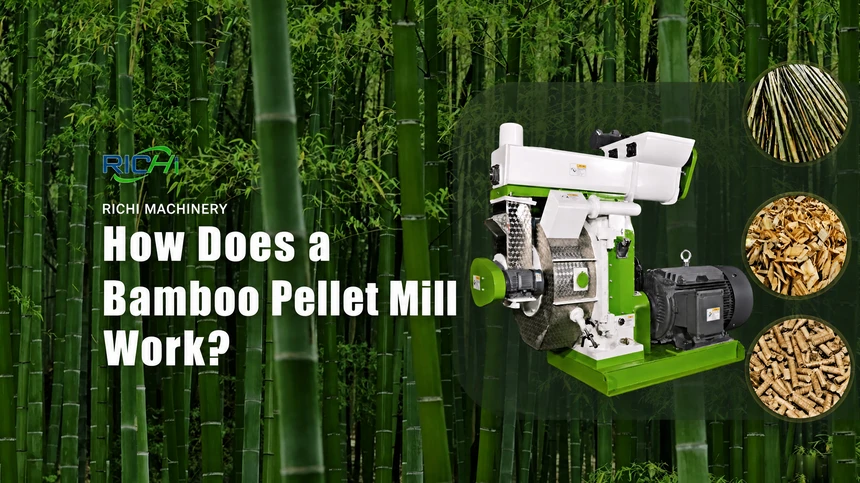
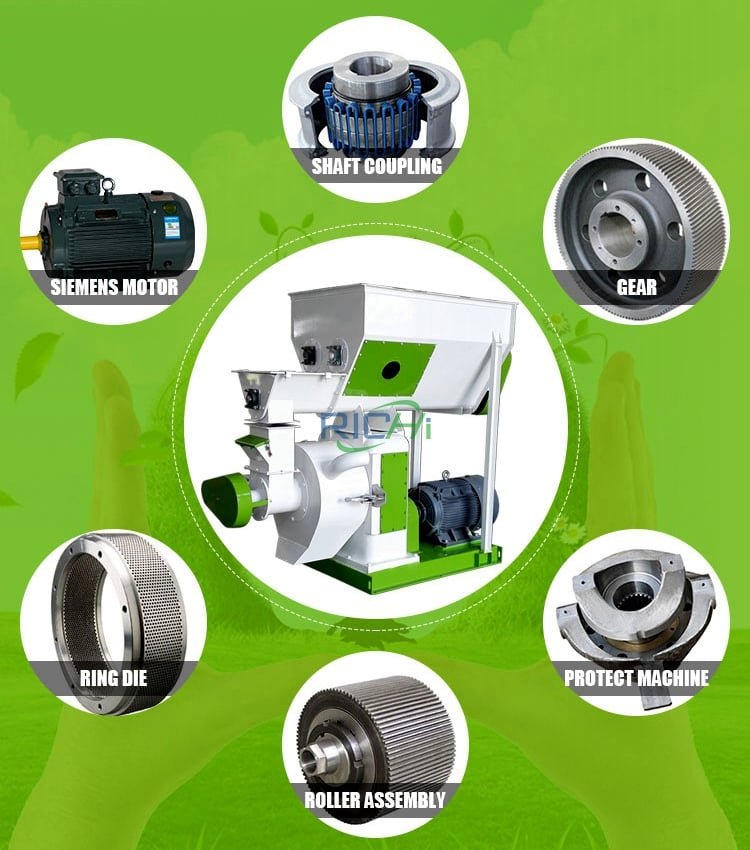
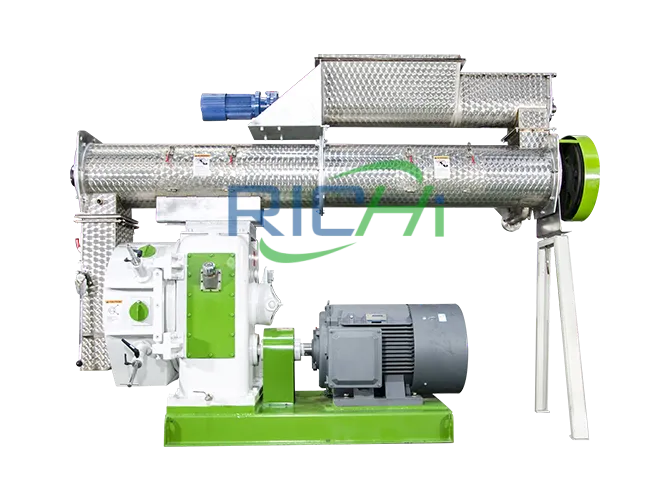
Pelletizing is the core step. A bamboo pellet mill compresses the dried material through a die under high pressure. The lignin in bamboo softens under heat and pressure, acting as a natural binder. The die specification matters. Bamboo is abrasive, so dies wear faster than with wood. Producers often choose dies with thicker walls and harder surfaces to extend life.
Cooling and screening follow. Hot pellets must be cooled before storage. Screening removes fines and oversized pellets. Fines can be recycled, but excessive recycling reduces efficiency.
Equipment Selection and Capacity
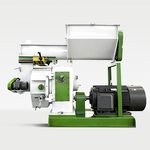
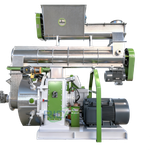
A 2t/h bamboo pellet mill for sale is a mid-scale system. It can produce roughly 16 tons per shift, or 32 to 48 tons per day if run in two or three shifts. That is enough to supply a regional market or an industrial customer.
But rated capacity is based on ideal conditions. Bamboo is harder to pelletize than many materials. Actual output may be lower, especially if the moisture is high, the die is worn, or the operator is inexperienced. A producer should plan for realistic output, not brochure numbers.
The supporting equipment must match the pellet mill. Grinders, mixers, dryers, coolers, screens, and packaging systems all need to be sized correctly. A bottleneck anywhere in the line reduces overall output. Dust collection is essential because bamboo dust is combustible and poses a health and safety risk.
Storage is another consideration. Raw bamboo must be kept dry before processing. Finished pellets must be kept dry and protected from moisture. In tropical climates, storage design is as important as the pellet mill itself.
Economic Considerations
Bamboo pellets compete with wood pellets, agricultural residue pellets, and coal. The economics depend on local prices, government policy, and the cost of collection and processing.
In regions where wood is scarce or expensive, bamboo pellets can be competitive. In regions with abundant cheap wood residue, bamboo may struggle unless it receives policy support or serves a specific niche.
The cost structure includes raw material production or collection, transport, storage, grinding, drying, pelletizing, cooling, screening, packaging, and distribution. Harvesting and transport often represent a large share of total cost because bamboo is bulky and spread across fields or plantations.
Government policy can change the economics significantly. Renewable energy incentives, carbon credits, and subsidies for biomass utilization can make bamboo pellets viable in markets where they would otherwise not compete. Policy changes can also remove that support, so producers should not rely entirely on subsidies.
Environmental Benefits and Trade-offs
Bamboo has environmental advantages. It grows quickly, absorbs carbon, protects soil, and regenerates after harvest. It can be grown on degraded land, reducing pressure on natural forests. These properties make it attractive as a renewable energy source.
But bamboo production is not automatically sustainable. Monoculture plantations can reduce biodiversity. Heavy harvesting without proper management can deplete soil nutrients. Processing requires energy, and transport adds emissions. The net environmental benefit depends on the full supply chain.
Producers who want to market bamboo pellets as a green fuel should be able to document their sourcing and production practices. Buyers increasingly ask about carbon footprint, land use, and sustainability certifications. A producer who can answer these questions has an advantage.
Market Development
Producing pellets is only half the business. Selling them is the other half. Bamboo pellets can be sold to power plants, district heating systems, industrial boilers, greenhouses, and residential customers. Each market has different requirements for pellet size, moisture, ash content, and packaging.
Power plants and industrial boilers usually require large volumes and consistent quality. They may have strict specifications for ash and chlorine content. District heating systems may accept a wider range. Residential customers may prefer bagged pellets with low ash and easy handling.
Market development takes time. Producers should identify potential customers before building the plant, not after. They should test their pellets with the intended end-use equipment. They should understand the price competitors offer and the quality those competitors deliver.
Contracts with farmers, cooperatives, or plantation owners can secure raw material supply. Contracts with industrial customers can secure demand. Both are important for stable operation.
Project Planning and Investment
Setting up a bamboo pellet plant is a capital project. It requires land, buildings, utilities, equipment, and working capital. The investment should be planned in phases.
Market research comes first. Who are the customers? What fuel do they use now? What prices do they pay? What quality do they require? This information shapes the product and the plant.
Raw material assessment follows. How much bamboo is available? At what cost? Who owns it? How will it be harvested and transported? A plant without a secure raw material supply will not run reliably.
Capacity planning comes next. How much product can be sold? How many shifts are needed? The plant should be sized to meet current demand with some room for expansion.
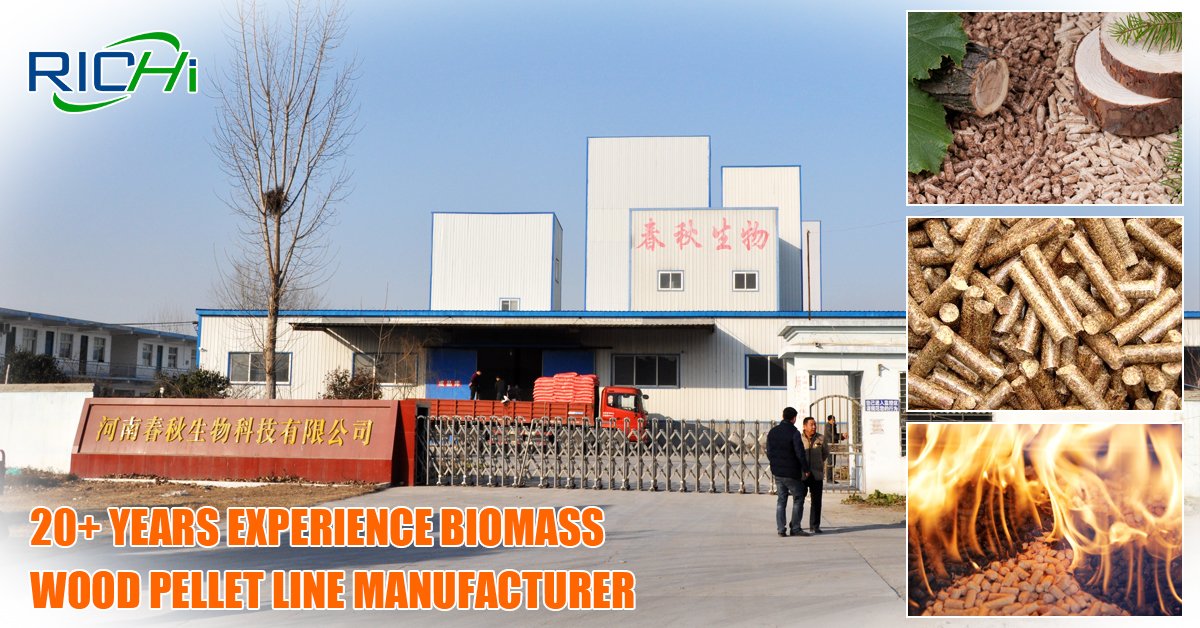
Equipment selection and supplier evaluation follow. The cheapest option is rarely the best. Total cost of ownership includes energy, maintenance, spare parts, and downtime. A supplier such as Richi Machinery may have experience across biomass applications, but the buyer should verify relevant experience and, if possible, visit a running plant.
For producers who want to understand equipment categories and options, https://pelletmakermachine.com/biomass-pellet-machine/ provides a reference point. But the page should be the starting point for deeper technical discussions, not the final decision.
Operating the Plant Over Time
Once the plant is running, daily management determines whether it remains profitable. Production records should track output, downtime, energy use, and quality results. Maintenance should be scheduled, not reactive. Operators should be trained and retrained as formulas and equipment change.
Raw material inventory should be managed to avoid shortages and excess. Finished product inventory should be rotated to ensure freshness. Customer feedback should be collected and acted on. A complaint about ash or durability is a signal to investigate the process.
Energy consumption deserves attention. Grinding, drying, pelletizing, cooling, and conveying all consume power. A plant that runs at partial load may have high energy cost per ton. A plant that runs too fast may produce poor quality and wear out equipment. Finding the right operating rate is an ongoing task.
Common Mistakes in Bamboo Pellet Projects
Several mistakes appear repeatedly in bamboo pellet projects.
Assuming bamboo behaves like wood. Bamboo is more abrasive and has different moisture behavior. Equipment and process settings must be adjusted.
Underestimating drying cost. Bamboo can contain a lot of water. Drying is often a major cost and a common bottleneck.
Ignoring die wear. Bamboo wears dies quickly. Budgeting for frequent replacement is essential.
Choosing capacity based on brochure numbers. Actual output is often lower with bamboo. Realistic planning prevents disappointment.
Skipping market development. Producing pellets without a buyer is a recipe for failure.
Running out of working capital. Raw materials must be purchased before product is sold. Cash flow must be planned carefully.
Conclusion
Bamboo is a renewable resource with real potential as a biomass fuel. It grows quickly, regenerates after harvest, and can be used on marginal land. But turning bamboo into pellets is not simple. The material is abrasive, moisture management is critical, and the economics depend on local markets and policy.
A bamboo pellet mill is the core of the production line, but it is only one part of the business. Raw material supply, drying, die maintenance, quality control, and market development all determine whether a project succeeds. A 2t/h bamboo pellet mill for sale can be the foundation of a profitable operation, but only if the producer understands the material, the process, and the market.
For those who want to discuss their specific project and evaluate whether bamboo pellets make sense for their region, try this web-site to start a conversation. A serious supplier will ask about raw material availability, moisture content, target market, and budget before recommending equipment.