

Feed quality has a direct influence on poultry growth, egg production, feed intake, flock uniformity, and overall production efficiency. For chicken farms and commercial feed manufacturers, producing feed with a consistent nutritional composition and suitable physical characteristics is therefore an important part of modern poultry management.
Chicken feed pellet technology provides an efficient way to improve both the nutritional and physical quality of poultry feed. Instead of simply mixing raw materials and feeding them as a loose mash, modern pellet production uses a series of controlled processes, including cleaning, grinding, batching, mixing, conditioning, pelletizing, cooling, screening, and packaging.
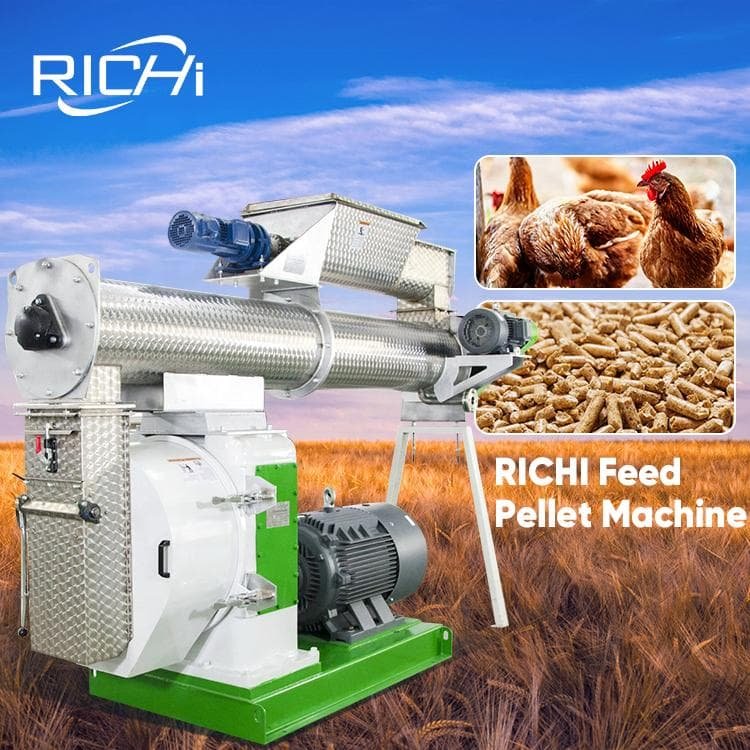
At the center of this process is the chicken feed pellet machine, which compresses the prepared feed mixture into compact pellets with controlled size and density. However, pellet quality does not depend on the pellet machine alone. The quality of raw materials, grinding, formulation, mixing, moisture control, steam conditioning, cooling, and screening all contribute to the final product.
When these processes are properly integrated, chicken feed pellet technology can produce more uniform feed, reduce ingredient separation, improve handling characteristics, reduce waste, and provide a more consistent feeding product for broilers, layers, breeders, and other poultry.
1. Why Feed Quality Matters in Chicken Production
Chicken feed must provide the nutrients required for different stages of poultry production.
Depending on the type of chicken, feed may need to provide appropriate levels of:
- Energy
- Protein
- Amino acids
- Fiber
- Minerals
- Vitamins
- Fat
- Calcium
- Phosphorus
- Other functional ingredients
Broilers, layers, chicks, and breeding chickens do not necessarily require the same formula.
A broiler starter feed, for example, may have different nutritional characteristics from a layer feed designed for egg production.
Modern feed production technology allows manufacturers to formulate and process different products while maintaining better consistency.
Physical feed quality is also important. Feed should have suitable particle size, pellet durability, moisture, density, and cleanliness.
2. From Loose Feed to Modern Pellets
Chicken feed can be supplied in different physical forms, including mash, crumble, and pellets.
Loose mash is relatively simple to produce, but ingredients with different particle sizes and densities can separate during transportation or handling.
Pellets compress the ingredients into a more uniform physical form.
The basic pellet production process is:
Raw Material Cleaning → Grinding → Batching → Mixing → Conditioning → Pelletizing → Cooling → Screening → Packaging
Each stage affects the final product.
The objective is not simply to produce pellets, but to produce pellets that are nutritionally consistent, physically stable, easy to handle, and appropriate for the target chickens.
3. Better Raw Material Preparation Improves Feed Quality
Feed quality starts with raw materials.
Common chicken feed ingredients include:
- Corn
- Wheat
- Barley
- Soybean meal
- Wheat bran
- Rice bran
- Fish meal
- Vegetable protein sources
- Vegetable oils
- Minerals
- Vitamin premixes
- Other feed additives
Before processing, raw materials should be inspected and cleaned.
Foreign materials such as stones, metal particles, plastic, soil, and other contaminants can affect both feed quality and equipment performance.
A cleaning system may include vibrating screens, pre-cleaners, magnetic separators, and other equipment.
Better raw material preparation creates a cleaner starting point for subsequent processing.
4. Grinding Creates More Uniform Feed Particles
Particle size has an important influence on chicken feed quality.
Grinding reduces the size of grains and other ingredients so they can be mixed more evenly.
A hammer mill is commonly used in feed production to process materials such as corn, wheat, barley, and other suitable ingredients.
The correct particle size depends on:
- Chicken age
- Feed type
- Raw material characteristics
- Pellet diameter
- Production process
- Desired feed texture
If particles are too large, mixing and pellet formation may become less uniform.
If materials are ground excessively fine, energy consumption may increase and the finished feed may generate more dust.
Modern grinding technology aims to achieve a suitable particle size rather than simply producing the finest possible powder.
5. Accurate Formulation Improves Nutritional Consistency
A good pellet cannot compensate for an inaccurate feed formula.
Modern chicken feed production uses formulation systems to calculate the appropriate quantities of different ingredients.
For example, a formula may contain:
- Corn as an energy source
- Soybean meal as a protein source
- Bran as a supplementary ingredient
- Oil for energy
- Calcium and phosphorus sources
- Vitamin and mineral premixes
The exact formula depends on the type and growth stage of the chicken.
Automatic batching equipment can weigh ingredients according to the selected formula.
This helps reduce manual errors and provides more consistent nutritional composition between batches.
6. Uniform Mixing Prevents Nutrient Separation
After batching, ingredients need to be mixed thoroughly.
A high-quality mixer distributes the ingredients throughout the batch.
This is especially important for low-inclusion ingredients such as vitamins, minerals, enzymes, and other additives.
Without adequate mixing, one portion of feed may contain more of a particular ingredient than another.
Modern mixers are designed to reduce mixing time while maintaining good uniformity.
This creates a more consistent feed mixture before the material enters the conditioning and pelletizing stages.
7. Steam Conditioning Improves Pellet Formation
Conditioning is one of the key technologies used before pelletizing.
Steam is added to the feed mixture under controlled conditions.
This can increase temperature and moisture and prepare the material for compression.
Proper conditioning may help improve:
- Pellet formation
- Pellet durability
- Material flow
- Production stability
- Pellet mill throughput
- Final pellet quality
The correct conditioning parameters depend on the feed formula.
High-starch formulas may respond differently to conditioning than formulas containing higher levels of fiber or protein.
Therefore, steam addition should be controlled rather than simply maximized.
8. The Role of the Chicken Feed Pellet Machine
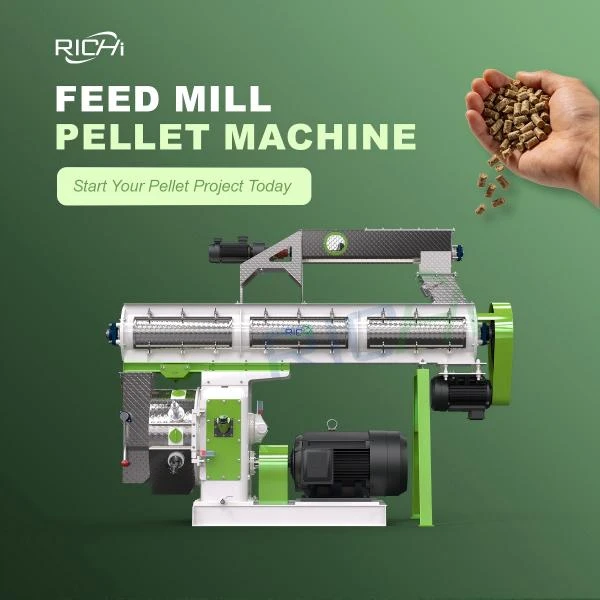
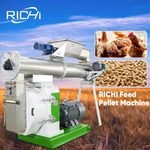
The chicken feed pellet machine is one of the core pieces of equipment in modern poultry feed production.
After the feed mixture has been prepared and conditioned, it enters the pellet machine.
Inside the pellet mill, rollers press the material through holes in a die.
The compressed material emerges as continuous pellets and is then cut to the required length.
The pellet machine influences:
- Pellet diameter
- Pellet density
- Pellet durability
- Production capacity
- Energy consumption
- Feed throughput
However, its performance also depends on the material preparation process.
A well-designed pellet machine cannot produce consistently high-quality pellets if the feed is poorly mixed, excessively dry, improperly conditioned, or unsuitable for the selected die.
(https://richipelletizer.com/chicken-feed-pellet-machine-for-sale/)
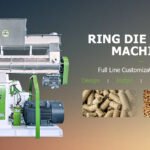
9. Die Selection Affects Pellet Quality
The die determines the diameter of the pellets.
Different chicken feed products may require different pellet sizes.
For example, young chicks may require smaller feed particles, while older broilers can consume larger pellets.
Layer and breeder feeds may also use different physical specifications depending on the production strategy.
The die should therefore be selected according to:
- Target chicken age
- Feed type
- Pellet diameter
- Formula composition
- Moisture
- Required production capacity
The compression ratio of the die can also influence pellet formation and durability.
An unsuitable die may lead to excessive fines, unstable output, or increased energy consumption.
10. Pellet Density Can Improve Handling
Pellet density is another important physical characteristic.
Loose feed occupies more space and can generate dust during transportation.
Pellets are more compact, which can improve:
- Storage efficiency
- Transportation
- Mechanical conveying
- Packaging
- Feed distribution
However, excessive density is not always desirable.
The appropriate density depends on the intended chicken feed product and feeding system.
The pelletizing process should therefore be adjusted to achieve suitable physical characteristics rather than simply maximizing compression.
11. Pellet Durability Reduces Feed Waste
Pellets need to survive transportation and handling without excessive breakage.
If pellets are fragile, they can generate fines during:
- Cooling
- Screening
- Conveying
- Packaging
- Transportation
- Storage
Excessive fines can reduce the consistency of the final product.
Pellet durability is affected by:
- Raw material composition
- Particle size
- Moisture
- Conditioning
- Die compression
- Pellet mill operation
- Cooling
- Handling
A stable production process can therefore improve pellet durability and reduce unnecessary feed losses.
12. Cooling Stabilizes Fresh Pellets
Pellets leave the pellet machine at an elevated temperature.
They also contain moisture that needs to be controlled before storage.
A pellet cooler uses controlled airflow to remove heat and stabilize the pellets.
Effective cooling can help prevent:
- Condensation
- Mold growth
- Moisture-related deterioration
- Pellet deformation
- Excessive breakage
Cooling is particularly important for commercial poultry feed plants because the final product may be stored and transported for extended periods.
The cooling equipment should be matched to the output of the chicken feed pellet machine so that it does not become a production bottleneck.
13. Screening Removes Excess Fines
After cooling, the pellets can be passed through a vibrating screen.
The screen separates:
- Finished pellets
- Fine particles
- Broken pellets
- Oversized material
The finished product can be sent to packaging.
Depending on the production design, suitable fines can be returned to the process.
This recycling approach can improve material utilization and reduce waste.
Screening also helps produce a more consistent finished product.
14. Crumbling Creates Suitable Feed for Chicks
Young chicks may require smaller particles than mature chickens.
A crumbler can be installed after pelletizing and cooling to reduce larger pellets into smaller particles.
The process can be:
Pelletizing → Cooling → Crumbling → Screening
This produces feed with a smaller particle size while maintaining the benefits of the pelletizing process.
Crumbling is commonly considered when producing starter feed or other products intended for young poultry.
15. Chicken Feed Pellet Technology Supports Different Production Stages
Modern feed production technology can support different poultry production stages.
Broiler Starter Feed
Starter feed is designed for young broilers and generally requires appropriate particle size and nutrient density.
Broiler Grower Feed
As broilers grow, their nutritional requirements and feed form may change.
Broiler Finisher Feed
Finisher feed can use different formulations and pellet specifications according to the production program.
Layer Feed
Layer feed requires nutritional considerations related to egg production, including calcium and mineral management.
Breeder Feed
Breeder feed may require controlled energy and nutrient levels according to breeding objectives.
A flexible production line can manufacture different formulas by changing the recipe and adjusting the appropriate process parameters.
16. Pellet Technology Helps Reduce Ingredient Separation
One challenge with loose feed is ingredient segregation.
Different ingredients have different particle sizes, densities, and physical characteristics.
During transportation or handling, heavier particles may move differently from lighter particles.
Pelletizing compresses these ingredients into a more unified physical form.
This can help reduce separation and maintain a more consistent mixture during subsequent handling.
As a result, pellet technology can contribute to better physical consistency from the feed mill to the feeding system.
17. Improved Feed Handling and Transportation
Pellets are generally easier to handle mechanically than loose mixtures.
They can be moved through:
- Screw conveyors
- Belt conveyors
- Bucket elevators
- Pneumatic systems
- Automated packing systems
Their compact form can also simplify storage and transportation.
For large poultry farms, efficient feed handling can reduce labor and improve the reliability of daily feeding operations.
18. Better Moisture Control Protects Feed Quality
Moisture is an important parameter throughout the production process.
Too much moisture can create storage problems, while insufficient moisture may affect pellet formation.
Modern feed production controls moisture during:
- Raw material storage
- Mixing
- Conditioning
- Pelletizing
- Cooling
- Finished-product storage
The goal is to achieve appropriate moisture conditions at each stage.
Sensors and process controls can help operators monitor important parameters and reduce variations between batches.
19. Automation Improves Feed Consistency
Modern poultry feed plants increasingly use automated control systems.
Automation can manage:
- Ingredient batching
- Grinding
- Mixing
- Steam conditioning
- Pelletizing
- Cooling
- Screening
- Packaging
A centralized control system can monitor equipment status and production parameters.
Automation reduces the amount of repetitive manual operation and can improve consistency.
For large feed mills producing multiple formulas, recipe management is particularly useful.
Operators can select a programmed formula and allow the system to manage ingredient quantities and processing sequences.
20. Energy Efficiency Supports Sustainable Feed Production
Energy consumption is an important part of feed production costs.
Modern equipment can improve energy efficiency through:
- Efficient motors
- Variable-frequency drives
- Optimized grinding
- Efficient conditioning
- Stable pellet mill operation
- Proper cooling airflow
- Balanced material conveying
A production line should not only produce high-quality pellets but also use energy efficiently.
Correct equipment sizing is important because oversized machinery may consume unnecessary power, while undersized equipment can become overloaded.
21. Better Equipment Matching Improves Pellet Quality
Feed quality depends on the entire production system.
For example, a pellet machine may have sufficient capacity, but if the grinder is too small, the feed mill cannot maintain continuous production.
Similarly, an undersized cooler can cause a bottleneck after pelletizing.
A complete production line should therefore balance:
Grinding Capacity → Mixing Capacity → Conditioning → Pelletizing Capacity → Cooling Capacity → Screening Capacity → Packaging Capacity
When these stages are properly matched, production becomes more stable.
22. High-Fiber Ingredients Require Specialized Processing
Some poultry formulas may contain higher levels of fiber or agricultural by-products.
These materials can have different physical properties from conventional grains.
They may require:
- Additional grinding
- Fiber cutting
- Moisture adjustment
- Longer conditioning
- Special die selection
The chicken feed pellet machine must be selected according to the actual formula rather than based only on the target capacity.
A machine that works well for one formula may require different settings for another.
23. Liquid Ingredients Need Controlled Addition
Some poultry feed formulas may include oils, fats, molasses, or other liquid ingredients.
Liquid addition should be controlled carefully.
Too much liquid can affect material flow and pellet formation, while poor distribution can create inconsistent feed.
A liquid addition system can include:
- Storage tanks
- Pumps
- Flow meters
- Spray nozzles
- Automatic valves
Controlled liquid addition helps maintain more consistent feed quality.
24. Preventive Maintenance Protects Pellet Quality
Equipment condition has a direct influence on production stability.
A worn die or roller can affect pellet formation and increase the amount of fines.
Regular maintenance should include:
- Inspecting the die
- Checking rollers
- Lubricating bearings
- Inspecting belts
- Checking motors
- Cleaning the pellet chamber
- Inspecting screens
- Checking cooling systems
Preventive maintenance can reduce unexpected downtime and maintain more stable pellet quality.
25. How Pellet Technology Reduces Feed Waste
Feed waste can occur at many stages.
It can result from:
- Incorrect batching
- Poor mixing
- Excessive fines
- Pellet breakage
- Poor cooling
- Improper storage
- Transportation losses
Modern pellet technology addresses several of these problems simultaneously.
Accurate batching reduces formula errors.
Uniform mixing improves ingredient distribution.
Stable pelletizing reduces excessive fines.
Cooling and screening improve physical stability.
Proper packaging and storage protect the finished product.
Together, these technologies can improve overall material utilization.
26. Feed Quality Control in Modern Poultry Feed Plants
A modern feed plant should monitor both nutritional and physical quality.
Important quality parameters may include:
- Moisture
- Particle size
- Pellet diameter
- Pellet durability
- Bulk density
- Fines percentage
- Nutrient composition
- Contamination
- Storage stability
Regular quality checks can help identify problems early.
For example, an increase in fines may indicate an issue with conditioning, die selection, cooling, or pellet mill operation.
Quality control should therefore be integrated into production management.
27. How RICHI Supports Chicken Feed Pellet Production
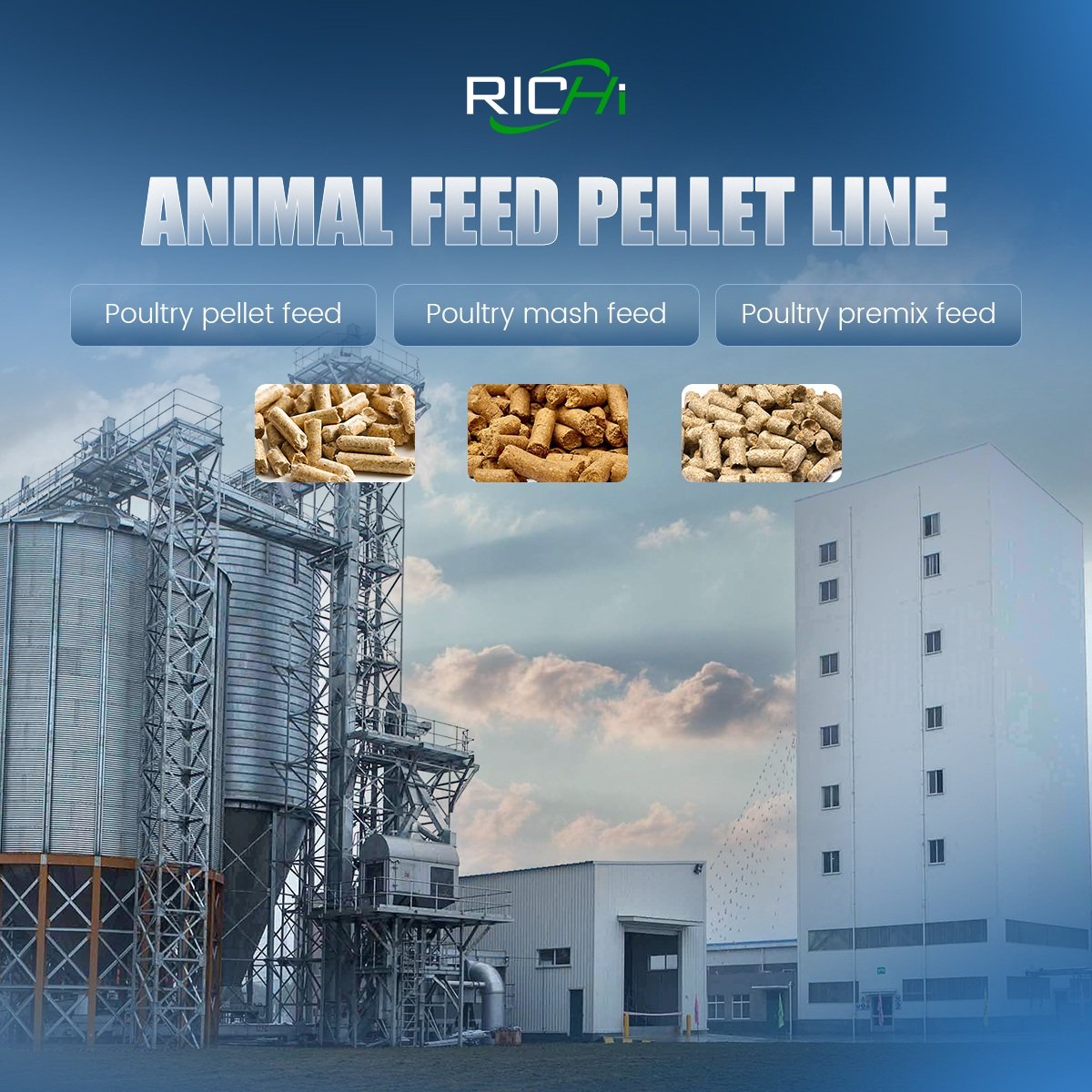
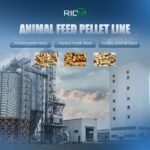
RICHI Pelletizer can design complete poultry feed production lines according to raw materials, formulas, target capacity, pellet size, automation requirements, and factory conditions.
A typical chicken feed pellet production line may include:
Raw Material Cleaning → Crushing → Grinding → Batching → Mixing → Conditioning → Chicken Feed Pellet Machine → Cooling → Screening → Crumbling if Required → Packing
The equipment configuration can be adjusted according to whether the customer produces broiler feed, layer feed, breeder feed, chick starter feed, or other poultry feed products.
The objective is to create a coordinated system rather than simply supply an individual machine.
28. Choosing a Chicken Feed Pellet Machine
When selecting a pellet machine, manufacturers should consider several factors.
Production Capacity
The machine should match the required output.
Pellet Diameter
The die should correspond to the desired pellet size.
Feed Formula
The machine should be suitable for the intended ingredients.
Raw Material Characteristics
Moisture, fiber, hardness, and particle size affect pelletizing performance.
Die Compression Ratio
The compression ratio should be appropriate for the formula.
Automation
The machine can be integrated into manual, semi-automatic, or fully automated systems.
Maintenance
Easy access to wear parts and reliable lubrication can simplify maintenance.
Long-Term Operation
Manufacturers should evaluate not only purchase price but also energy consumption, spare parts, production stability, and expected service life.
29. Why Complete Process Design Matters
Purchasing a pellet machine alone does not guarantee high-quality chicken feed.
The machine needs properly prepared material.
A complete production system should coordinate:
- Raw material cleaning
- Grinding
- Batching
- Mixing
- Conditioning
- Pelletizing
- Cooling
- Screening
- Crumbling when required
- Packaging
When all these stages are designed together, manufacturers can better control the physical properties of the final feed.
This is particularly important for commercial feed mills that need consistent quality over long production periods.
30. Future Trends in Chicken Feed Pellet Technology
Chicken feed production technology is becoming increasingly automated and data-driven.
Future systems are likely to place greater emphasis on:
- Automated formula management
- Real-time production monitoring
- Intelligent energy management
- Automated quality control
- Predictive maintenance
- More precise ingredient dosing
- Flexible multi-formula production
- Improved material utilization
Digital technologies can help feed manufacturers understand production performance in greater detail.
Data from grinding, mixing, conditioning, pelletizing, cooling, and packaging can be used to identify bottlenecks and improve production efficiency.
Conclusion
Chicken feed pellet technology improves feed quality by integrating accurate formulation, controlled raw material preparation, grinding, batching, mixing, conditioning, pelletizing, cooling, screening, and packaging into one coordinated process.
The chicken feed pellet machine plays a central role by compressing the prepared feed mixture into uniform pellets. However, the final quality depends on the entire production system. Proper grinding improves particle consistency, accurate batching supports nutritional accuracy, mixing distributes ingredients evenly, and conditioning prepares the material for efficient pellet formation.
After pelletizing, effective cooling and screening help maintain pellet stability and reduce fines. For young chickens, crumbling technology can further adjust particle size to meet feeding requirements.
Modern pellet production also supports better handling, storage, transportation, automation, and material utilization. When equipment is correctly matched to the feed formula and production capacity, poultry feed manufacturers can achieve more stable production and consistent product quality.
For farms and commercial feed manufacturers, the best approach is to design the production process around actual requirements, including chicken type, growth stage, feed formula, raw materials, pellet size, capacity, and automation level. A properly configured chicken feed production line can then provide a reliable foundation for producing consistent, high-quality feed for different poultry applications.