

Drive through any alfalfa-growing region, and you will see the same crop in the same fields. But talk to the growers, and you will hear very different stories. One grower is barely breaking even, complaining about hay prices and weather. Another is expanding, investing in equipment, and selling into markets the first grower has never even considered. Same crop. Same soil. Same climate. Different outcome.
The difference is not the alfalfa. It is what happens after the alfalfa is cut. The growers who are doing well have figured out something that the others have not. They have stopped selling a commodity and started selling a product. And the tool that makes that shift possible is a complete processing line.
The Problem With Selling Hay
Hay is a commodity. It is sold by the ton, priced by the bale, and judged by appearance. The market is crowded. The margins are thin. And the product is fragile. Every time hay is handled—raked, baled, stacked, loaded, unloaded, fed—leaves shatter and fall away. Those leaves are where the protein is. They are where the vitamins are. They are the most valuable part of the plant. By the time the hay reaches the animal, a significant portion of that value is gone.
Hay is also bulky. It takes up space in the barn, in the truck, and in the feeder. Transporting it long distances is expensive. That limits the market to nearby buyers. If you are in a region with many alfalfa growers, you are competing with all of them for the same customers.
And hay is inconsistent. One field might test at 18% protein. Another might test at 22%. The buyer does not know what they are getting until they test it. That uncertainty makes them cautious. It makes them negotiate hard. It keeps the price down.
What Changes When You Process
When alfalfa is processed into pellets, all of those problems disappear. The entire plant—leaves and stems together—is ground into a uniform meal and pressed into dense pellets. Nothing is lost to shattering. Nothing is wasted to sorting. The nutritional profile of the pellet reflects the nutritional profile of the whole plant, not just the stems that survived handling.
The pellets are consistent. Every bag, every batch, every shipment has the same protein content, the same fiber content, the same energy value. Buyers know what they are getting. That consistency commands a premium price.
The pellets are dense. A ton of pellets takes up a fraction of the space of a ton of hay. They can be stored in bins or silos, loaded into bulk trucks, and shipped long distances economically. The market expands from local farms to regional feed mills, export terminals, and specialty buyers.
And the pellets are stable. They do not mold or spoil if they are kept dry. They can be stored for months without losing quality. That means you can sell when prices are high instead of being forced to sell at harvest.
The Equipment That Makes It Possible
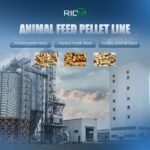
A complete alfalfa pellet production line is not a single machine. It is a series of machines that work together. Each one does a specific job. Each one matters.
The process starts with grinding. A hammer mill reduces the hay to a consistent particle size, usually 2 to 4 millimeters. The grind affects how the material conditions, how it pellets, and how the final product performs.
Next comes conditioning. Steam is added to the ground material to soften the fibers and activate the natural binders. The temperature and moisture must be controlled precisely. Too little conditioning, and the pellets will be weak. Too much, and the material becomes sticky and difficult to press.
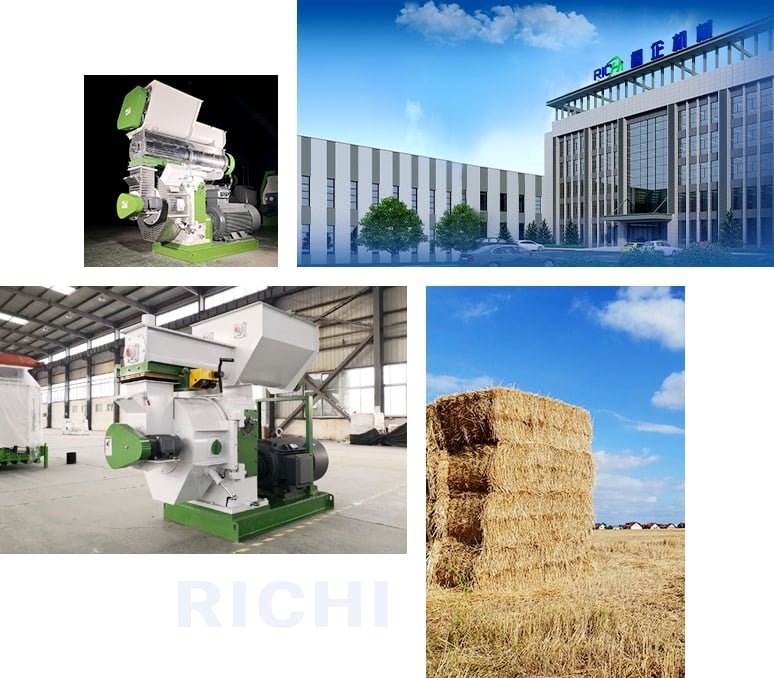
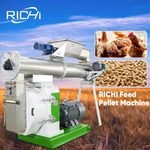
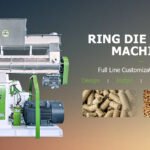
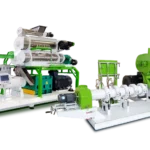
The heart of the line is the pellet press. This is the machine that compresses the conditioned material through a die under high pressure. The friction generates heat, which melts the natural lignin and binds the particles into a solid pellet. The die determines the pellet size and density. The rollers press the material through the die. The motor provides the power. The control system keeps everything running smoothly.
After pelleting, the hot pellets are cooled. Cooling hardens them and reduces moisture to a safe level for storage. Then a screener removes fines and broken pellets, which are recycled back into the process. The finished pellets are uniform, durable, and ready for market.
The Turnkey Advantage
Building a pellet line is not like buying a single machine. It is a project. There are many decisions to make: what capacity do you need? What equipment configuration? Where will you put it? How will you power it? Who will run it? How will you maintain it?
For many growers, the idea of managing all of that is overwhelming. That is where a turnkey approach comes in. An alfalfa pellet machine turnkey project is a complete solution. The supplier handles the design, the engineering, the equipment selection, the installation, and the commissioning. They train your operators. They provide the documentation. They make sure the line runs the way it is supposed to run before they hand it over.
Turnkey does not mean you are hands-off. You still need to understand the process, manage the inputs, and sell the product. But it does mean you do not have to become an expert in every piece of equipment. The supplier brings that expertise. You bring the alfalfa and the market.
The turnkey approach also reduces risk. When a single supplier is responsible for the whole line, there is no finger-pointing if something goes wrong. They designed it. They built it. They installed it. They commissioned it. They own the outcome. That accountability is worth a lot when you are investing in a new operation.
What to Look For in a Turnkey Partner
Not every supplier offers a true turnkey solution. Some sell equipment and call it turnkey. Others provide design and installation but leave the commissioning to you. It is important to know what is included and what is not.
A true turnkey partner will start by understanding your goals. How much alfalfa do you have? What is its quality? What market are you targeting? What capacity do you need? What is your budget? They will use those answers to design a line that fits your situation.
They will also help you understand the operating costs. Electricity, labor, maintenance, spare parts—these are the costs that determine whether the line is profitable. A good partner will be honest about them.
They will provide training. The best equipment in the world will not perform if the operators do not know how to run it. Training should cover not just how to start and stop the machine, but how to monitor quality, how to adjust parameters, and how to troubleshoot common problems.
They will provide support after the sale. Dies wear out. Bearings fail. Belts break. You need a partner who can supply parts and answer questions quickly. A partner who disappears after the sale is not a partner. They are a vendor.
The Market for Alfalfa Pellets
Alfalfa pellets are sold into several markets. The largest is the dairy industry. Dairy farmers use alfalfa pellets as a protein supplement in total mixed rations. The consistency of the pellets allows them to formulate precisely and predict milk production.
The horse market is another important segment. Horse owners value alfalfa pellets for their high nutritional content and low dust. Pellets are easier to store and handle than hay, and they reduce the risk of respiratory issues caused by mold and dust.
The export market is growing. Alfalfa pellets are shipped from production regions to areas where alfalfa cannot be grown or where hay is scarce. The density of the pellets makes transportation economical, even over long distances.
There are also smaller markets. Rabbit and guinea pig owners use alfalfa pellets as a primary feed. Organic fertilizer producers sometimes use alfalfa pellets as a soil amendment. And in some regions, alfalfa pellets are used as a biomass fuel, though this is less common than for wood or straw pellets.
The premium markets pay for consistency, cleanliness, and nutritional quality. That is where a well-run production line can differentiate itself. Consistent pellets command better prices. Inconsistent pellets are discounted or rejected.
The Economics of Processing
The decision to invest in a pellet line is ultimately an economic one. The costs include the equipment, installation, energy, labor, maintenance, and financing. The benefits include reduced leaf loss, improved feed efficiency, access to new markets, and better storage and transport economics.
The reduction in leaf loss alone can be significant. If 20% of the crop is currently lost between field and feeder, pelleting can recover most of that value. On a large alfalfa operation, that recovered value can cover a substantial portion of the equipment cost.
The revenue from pellet sales adds to the return. Alfalfa pellets typically sell at a premium to baled hay because of their consistency and convenience. Export markets often pay especially well for high-quality pellets that meet protein and durability specifications.
The operating costs are predictable. Electricity is the largest variable cost. Labor depends on automation. Maintenance depends on wear parts and operating hours. A well-designed line with good support will have lower long-run costs than a poorly designed one.
Making the Decision
Producing alfalfa pellets is not for every operation. It requires a reliable supply of alfalfa, a market for the pellets, and the capital to invest in equipment. It also requires a willingness to learn the process and to maintain quality consistently.
For operations that have the supply and the market, pelleting can transform alfalfa from a commodity into a branded, value-added product. It can reduce waste, improve animal performance, and open new revenue streams. The technology is proven. The equipment is available. The question is whether the economics work for your specific situation.
A complete line, a turnkey project, and a reliable pellet press are the building blocks. The rest is up to you.