


The livestock industry continues to grow worldwide as demand for meat, milk, eggs, and other animal products increases. Behind successful livestock farming is one critical factor: high-quality animal feed. Feed accounts for a significant portion of livestock production costs, and farmers are constantly looking for reliable, nutritious, and cost-effective feed solutions.
This growing demand creates an excellent opportunity for entrepreneurs to establish an animal feed pellet production business. By producing pellet feed, manufacturers can supply farmers with standardized, balanced, and easy-to-use feed products while creating a profitable agricultural business.
Animal feed pellet production involves processing different raw materials, including grains, oilseed meals, forage, agricultural byproducts, vitamins, and minerals, into compact pellets through mechanical compression. Compared with traditional powder feed, pellet feed offers advantages such as better nutrient utilization, reduced waste, easier storage, and improved transportation efficiency.
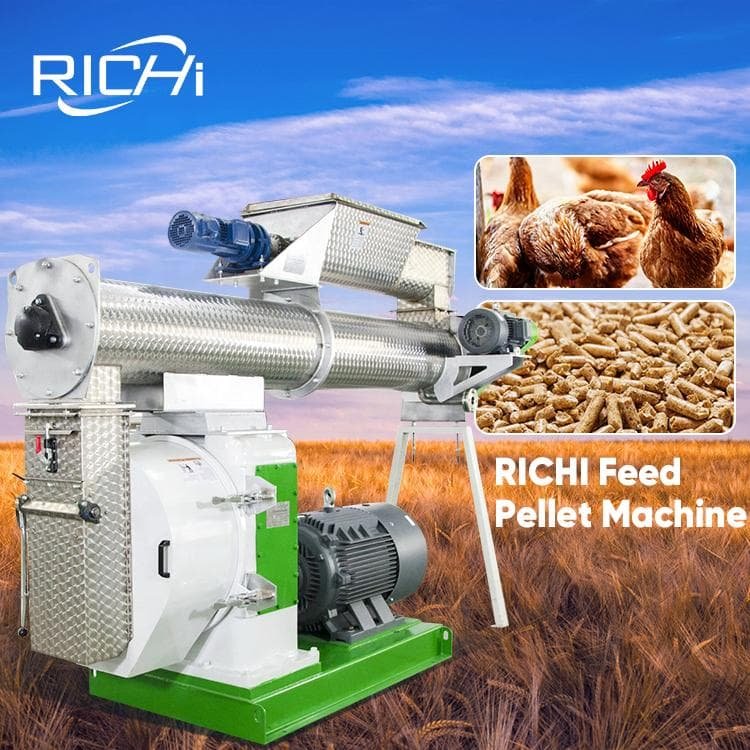
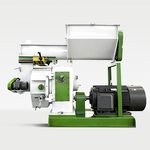
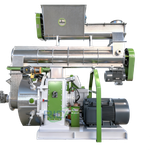
Starting an animal feed pellet production business requires careful planning, including market research, raw material analysis, production line design, equipment selection, investment evaluation, and quality management. For entrepreneurs focusing on poultry feed production, investing in reliable equipment such as a chicken feed pellet machine for sale can help establish an efficient production system capable of meeting market demand.
This article provides a detailed guide on how to start an animal feed pellet production business successfully.
1. Understand the Animal Feed Pellet Market
Before investing in an animal feed pellet business, the first step is understanding the market demand.
Animal feed is required by many livestock sectors, including:
- Poultry farming
- Cattle farming
- Sheep and goat farming
- Pig farming
- Rabbit farming
- Fish farming
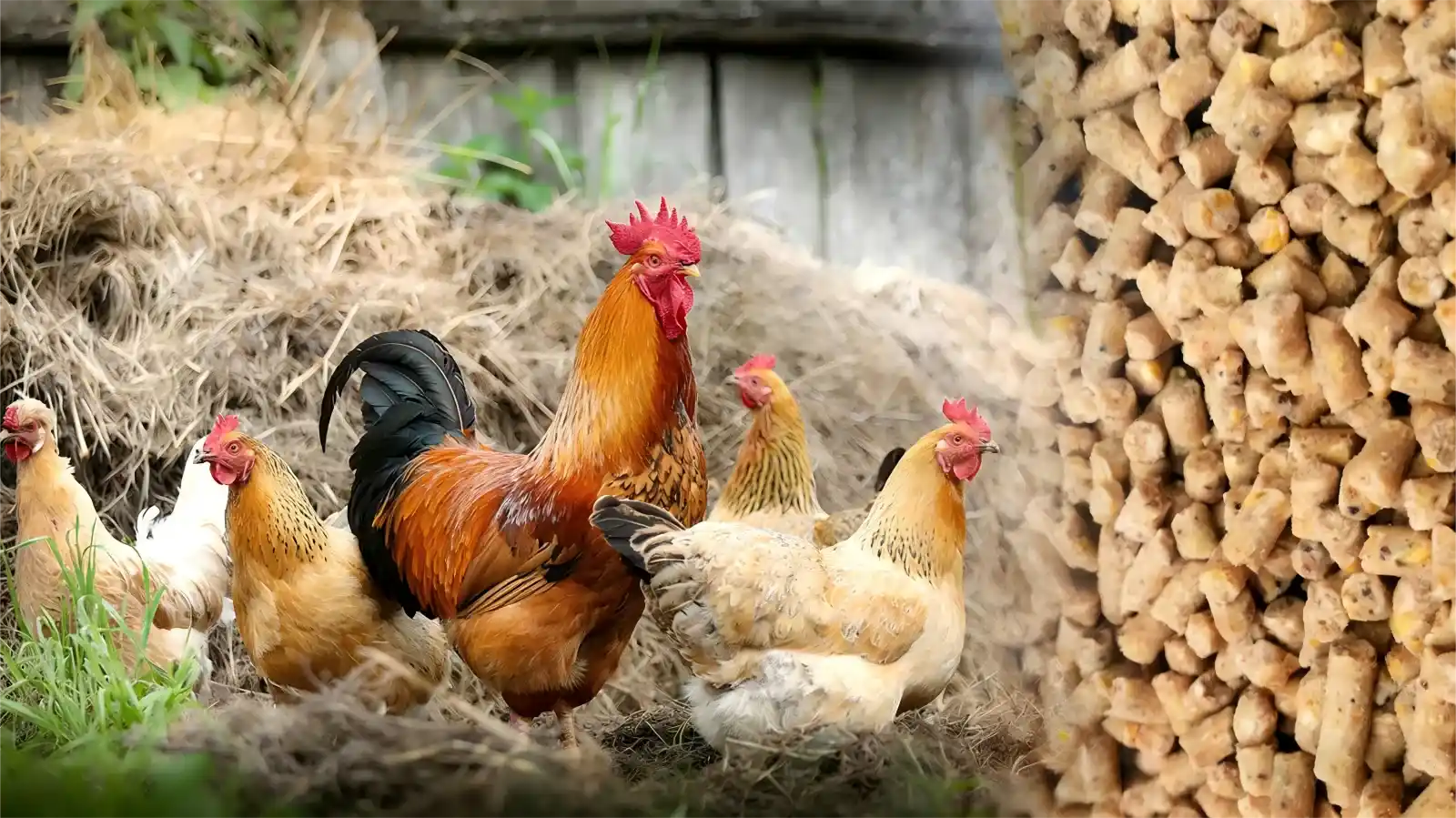
Among these sectors, poultry feed production is one of the largest markets because chickens have short production cycles and require continuous feed supply.
Market research should focus on:
Local Livestock Industry
Analyze the number of farms, livestock populations, and feed consumption levels in the target area.
Customer Requirements
Different farmers have different feed requirements depending on:
- Animal species
- Growth stage
- Production purpose
For example:
- Broiler chickens need high-energy feed for rapid growth.
- Layer chickens require balanced nutrients for egg production.
- Dairy cattle need sufficient fiber and energy.
Competition Analysis
Understanding existing feed suppliers helps determine:
- Product positioning
- Pricing strategy
- Production capacity
A clear understanding of the market helps investors select suitable production scales and avoid unnecessary risks.
2. Select Suitable Feed Products
An important decision when starting a feed pellet business is determining what types of pellets to produce.
Possible products include:
Poultry Feed Pellets
Poultry feed is widely demanded by chicken farms. Products may include:
- Broiler feed pellets
- Layer feed pellets
- Chick starter feed
Livestock Feed Pellets
These include:
- Cattle feed pellets
- Goat feed pellets
- Sheep feed pellets
- Pig feed pellets
Specialized Feed Products
Businesses can also develop customized feed products based on local market needs.
Choosing the right product depends on:
- Available raw materials
- Customer demand
- Production capacity
- Investment budget
For entrepreneurs targeting poultry markets, selecting a suitable chicken feed pellet machine for sale is an important step because equipment capacity and performance directly affect production efficiency and product quality.
3. Analyze Available Raw Materials
Raw materials are the foundation of an animal feed pellet production business. Stable access to quality ingredients helps reduce production costs and maintain consistent product quality.
Common feed pellet raw materials include:
Energy Ingredients
- Corn
- Wheat
- Barley
- Sorghum
These provide energy required for animal growth.
Protein Ingredients
- Soybean meal
- Fish meal
- Rapeseed meal
- Cottonseed meal
These support muscle development and production performance.
Fiber Ingredients
- Alfalfa
- Grass meal
- Rice bran
- Wheat bran
These support digestion, especially for ruminant animals.
Additives
- Minerals
- Vitamins
- Amino acids
These improve nutritional balance.
Before production, raw materials should be tested for:
- Moisture content
- Nutritional value
- Contamination
- Storage conditions
Reliable raw material supply is essential for long-term business success.
4. Develop a Business Plan
A detailed business plan helps investors understand project requirements and expected returns.
A complete poultry feed production line should include:
Production Goals
Determine:
- Daily output
- Target customers
- Product types
For example:
- Small farm-scale production
- Medium commercial feed plant
- Large industrial feed factory
Investment Budget
Consider costs such as:
- Land
- Factory construction
- Equipment purchase
- Raw materials
- Labor
- Electricity
- Transportation
Revenue Forecast
Estimate:
- Production capacity
- Product selling price
- Operating expenses
- Expected profit
Marketing Strategy
Develop plans for:
- Customer acquisition
- Product promotion
- Distribution channels
A professional business plan helps investors make better decisions and obtain financing when necessary.
5. Choose the Right Production Capacity
Production capacity should match market demand and investment ability.
Common production scales include:
Small Feed Pellet Production
Suitable for:
- Family farms
- Small livestock operations
Advantages:
- Lower investment
- Simple operation
- Local feed supply
Medium Feed Production Plant
Suitable for:
- Regional feed suppliers
- Growing agricultural businesses
Advantages:
- Higher output
- Wider customer base
- Better profitability
Large Commercial Feed Factory
Suitable for:
- Industrial feed manufacturers
- Large livestock enterprises
Advantages:
- High production efficiency
- Large market coverage
Choosing the correct capacity prevents overinvestment and ensures stable operation.
6. Design the Animal Feed Pellet Production Line
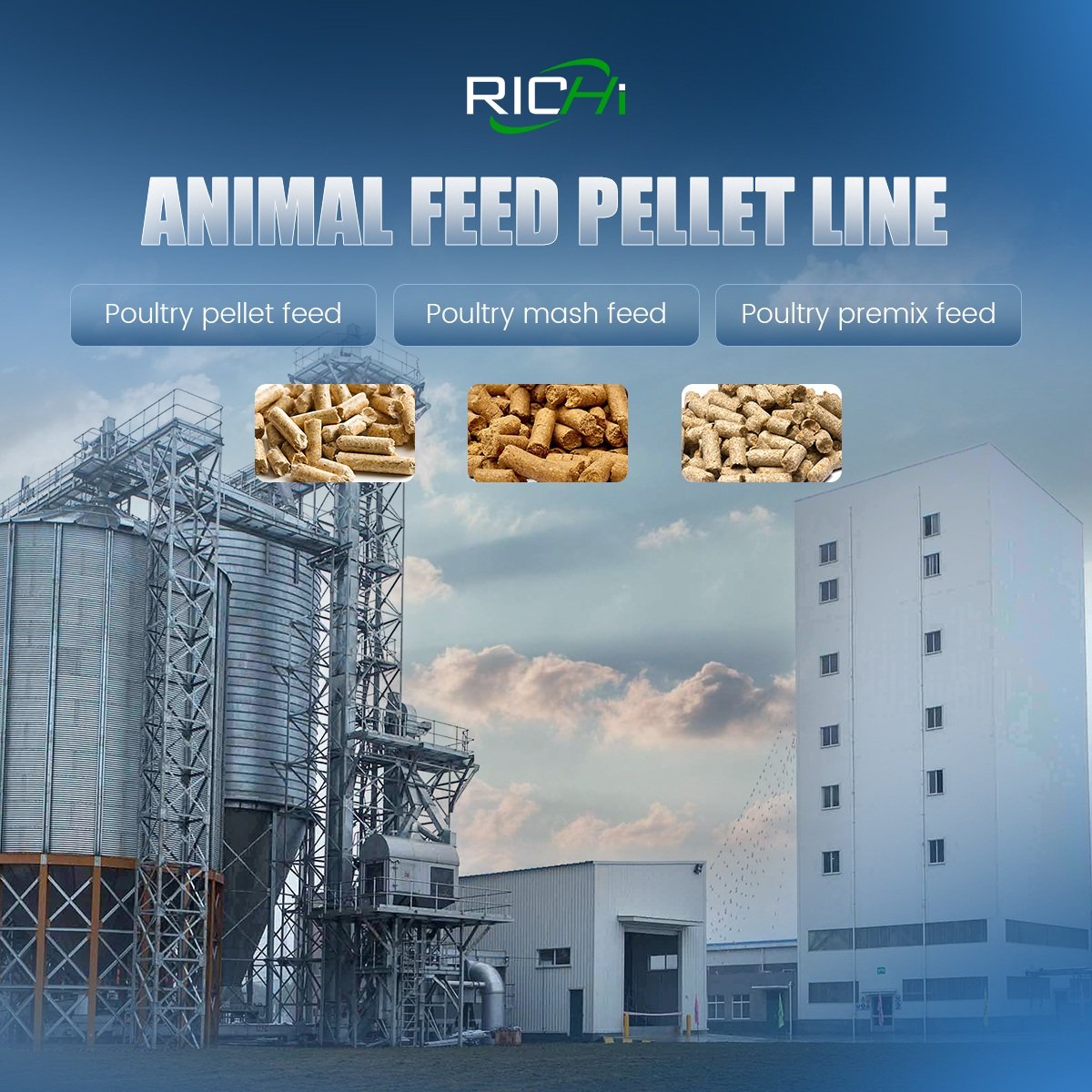
A complete animal feed production line includes multiple processing stages.
https://richipelletizer.com/animal-feed-production-line
The typical process includes:
- Raw material receiving
- Cleaning
- Crushing
- Batching
- Mixing
- Conditioning
- Pelletizing
- Cooling
- Screening
- Packaging
Each stage contributes to final feed quality.
Crushing System
The crusher reduces raw materials into suitable particle sizes.
Benefits:
- Better mixing
- Improved pellet formation
- Enhanced digestibility
Mixing System
The mixer ensures all ingredients are evenly distributed.
Conditioning System
Steam conditioning improves pellet quality by increasing material binding ability.
Pelletizing System
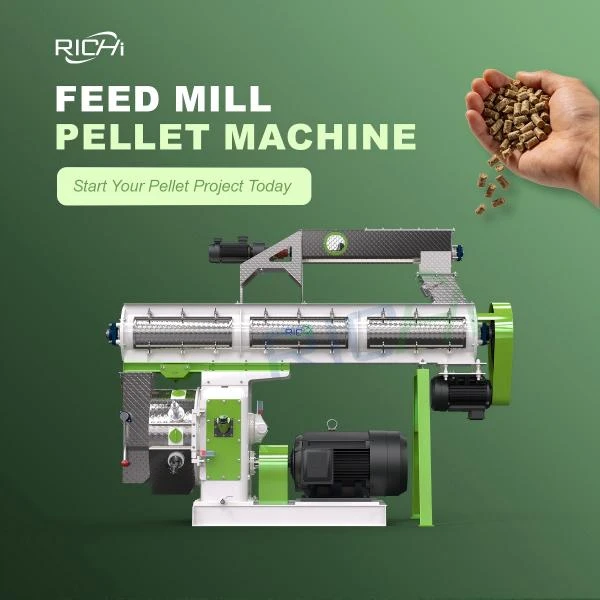
The pellet machine compresses feed materials into pellets.
Cooling and Screening System
Cooling strengthens pellets, while screening removes broken products.
Packaging System
Packaging protects finished products during storage and transportation.
A well-designed production line ensures efficient operation and consistent feed quality.
7. Select Reliable Feed Pellet Production Equipment
Equipment selection is one of the most important decisions when starting a feed pellet business.
Important factors include:
- Production capacity
- Equipment durability
- Energy consumption
- Maintenance requirements
- Automation level
For poultry feed production, many investors search for a chicken feed pellet machine for sale because poultry farms require continuous and stable feed supply.
When selecting pellet equipment, consider:
Pellet Quality
The machine should produce pellets with:
- Uniform size
- Strong durability
- Low powder content
Production Efficiency
High-quality equipment should provide stable output with minimal downtime.
Operating Cost
Energy-efficient machines help reduce long-term expenses.
Technical Support
Reliable suppliers should provide:
- Installation guidance
- Operator training
- Spare parts support
- Maintenance assistance
Choosing suitable equipment directly influences the profitability of the feed business.
8. Understand the Feed Pellet Production Process
A successful feed business requires knowledge of the complete manufacturing process.
Step 1: Raw Material Preparation
Ingredients are collected, inspected, and cleaned.
Step 2: Grinding
Large materials are crushed into smaller particles.
Step 3: Mixing
All ingredients are mixed according to the feed formula.
Step 4: Conditioning
Steam and moisture improve pellet formation.
Step 5: Pelletizing
The pellet machine compresses the mixture into pellets.
Step 6: Cooling
Hot pellets are cooled to improve stability.
Step 7: Screening
Broken pellets and powder are separated.
Step 8: Packaging
Finished pellets are packed for sale.
Understanding each stage helps operators maintain product quality and production efficiency.
9. Establish Quality Control Standards
Quality control is essential for building customer trust.
Important quality factors include:
Nutritional Accuracy
Feed formulas must provide correct nutrient levels.
Pellet Durability
Strong pellets reduce transportation losses.
Moisture Control
Proper moisture prevents mold development.
Product Safety
Raw materials must be free from harmful contaminants.
Regular testing ensures that products meet customer expectations.
High-quality feed products help farmers achieve better livestock performance, creating long-term business relationships.
10. Plan Factory Layout and Infrastructure
A practical factory layout improves production efficiency.
A typical feed pellet plant includes:
Raw Material Storage Area
For storing grains, meals, and additives.
Processing Area
Contains crushers, mixers, and pellet machines.
Finished Product Warehouse
Stores packaged feed pellets.
Office and Laboratory Area
Used for management and quality testing.
The factory should also consider:
- Electricity supply
- Ventilation
- Fire protection
- Transportation access
A well-designed layout reduces material movement and improves operational efficiency.
11. Build a Strong Marketing Strategy
Producing quality feed is only part of the business. Effective marketing is necessary to attract customers.
Potential customers include:
- Poultry farms
- Livestock farms
- Agricultural cooperatives
- Feed distributors
Marketing methods include:
Direct Farm Sales
Build relationships with local farmers.
Distributor Networks
Work with agricultural product suppliers.
Online Promotion
Use websites, social media, and digital marketing.
Product Demonstration
Show farmers how pellet feed improves livestock performance.
Building a strong brand helps create long-term market competitiveness.
12. Manage Production Costs
Cost control is essential for profitability.
Major costs include:
- Raw materials
- Electricity
- Labor
- Equipment maintenance
- Packaging
Ways to reduce costs include:
Purchasing Local Materials
Reduces transportation expenses.
Improving Production Efficiency
Minimizes energy consumption and downtime.
Reducing Feed Waste
Improves resource utilization.
Maintaining Equipment Properly
Extends machine service life.
Effective cost management increases business profitability.
13. Future Development Opportunities
The animal feed pellet industry has strong growth potential due to increasing demand for animal products.
Future opportunities include:
Customized Feed Production
Develop feed formulas for specific animals and growth stages.
Sustainable Feed Ingredients
Use agricultural byproducts as alternative resources.
Automated Production
Smart control systems improve efficiency.
Expansion into New Markets
Growing livestock industries create new business opportunities.
Entrepreneurs who invest in modern technology and quality management can achieve long-term success.
Conclusion
Starting an animal feed pellet production business requires careful planning, market understanding, suitable equipment selection, and effective production management. From raw material preparation to pellet production and packaging, every stage influences product quality and business profitability.
Animal feed pellets provide significant advantages by improving nutrient utilization, reducing waste, simplifying storage, and supporting efficient livestock growth. For investors focusing on poultry feed production, choosing reliable equipment such as a chicken feed pellet machine for sale can help establish a productive and competitive feed manufacturing operation.
With increasing demand for high-quality animal feed worldwide, the animal feed pellet production business offers promising opportunities for entrepreneurs who can provide consistent products, efficient production systems, and reliable service to livestock farmers.