




Hemp residues can become a useful biomass feedstock when agricultural or processing waste is available in sufficient quantities. However, a successful pellet project depends on more than installing a pellet mill. The raw material must move through preparation, moisture adjustment, compression, cooling, and storage in a balanced sequence.
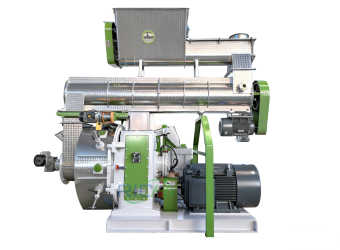
A hemp pellet machine for biomass fuel is normally selected after these basic production conditions have been established.
Begin With the Available Hemp Material
Before choosing equipment, the project should identify the actual material available.
Hemp stems and stalks can be long and fibrous, while smaller residues may already be partially processed. The material can also vary according to harvesting and storage methods.
A factory receiving whole stalks will require more preparation than one receiving pre-cut and dried material.
The first evaluation should therefore include:
- Material type
- Moisture
- Particle size
- Bulk density
- Daily supply
- Contamination level
This information provides the starting point for equipment selection.
Why Is the Production Flow Important?
A pellet mill can only maintain stable production when material reaches it at a consistent rate.
If the cutting or crushing stage is too slow, the pellet mill may run below capacity. If the dryer cannot process enough material, production may also be interrupted.
The same principle applies after pelletizing. Insufficient cooling or screening capacity can create a bottleneck even when the pellet mill itself has enough capacity.
A balanced production flow is therefore more important than simply selecting the largest machine.
Preparing Hemp Before Pelletizing
Long hemp stalks generally need to be cut into smaller sections.
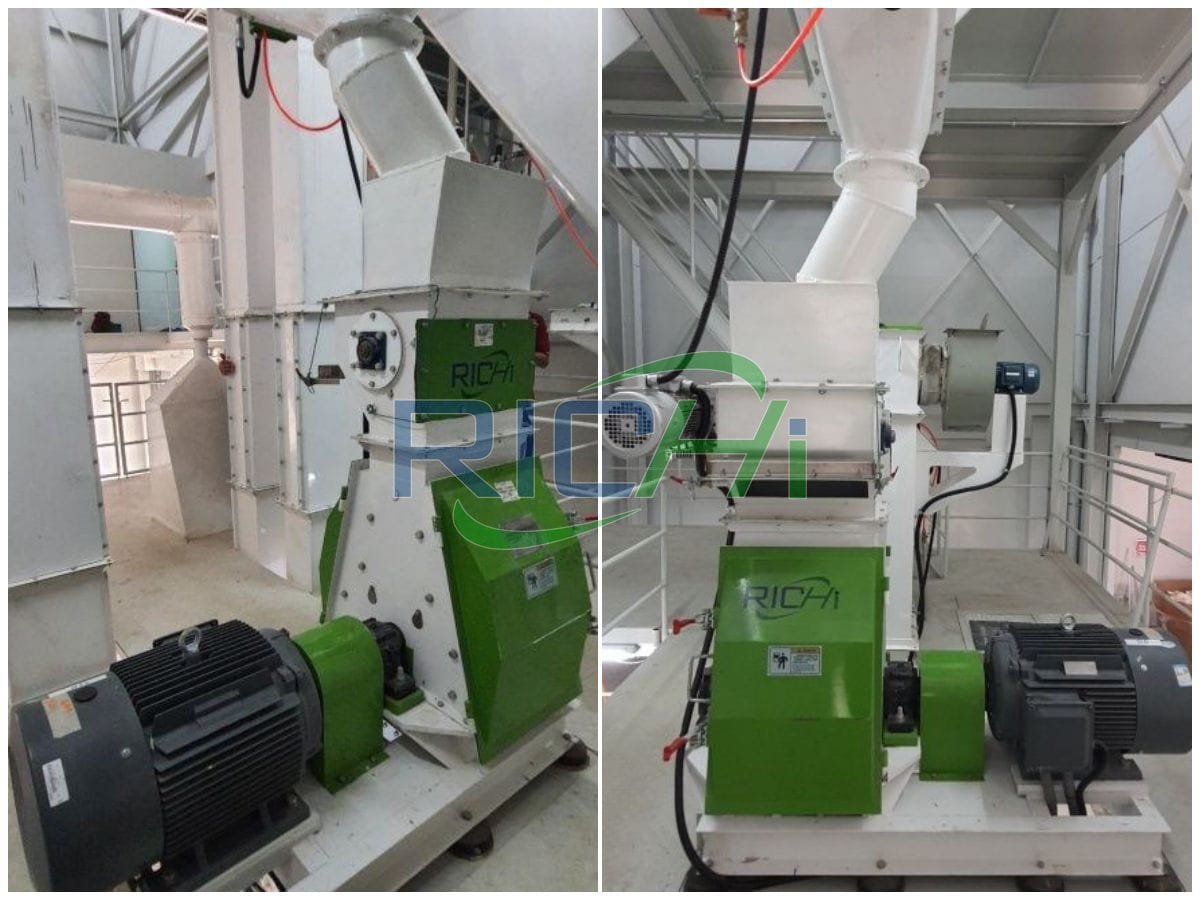
A hammer mill can then reduce the material further to a suitable particle size.
The required particle size depends on the pellet diameter and material characteristics.
The goal is to create a consistent feedstock that can enter the pelletizing chamber smoothly.
Extremely fine grinding is not necessarily required. In some applications, excessive grinding can increase electricity consumption without improving the final product.
Does Every Hemp Project Need a Dryer?
No.
A drying machine is normally added when the raw material contains excessive moisture.
If the hemp has already been dried naturally or mechanically and reaches a suitable moisture range before pelletizing, a separate dryer may not be necessary.
This distinction is particularly important for small projects because a dryer can add significant investment, energy consumption, and floor-space requirements.
Testing the actual hemp residues before finalizing the equipment list can prevent unnecessary equipment purchases.
Selecting the Pelletizing Equipment
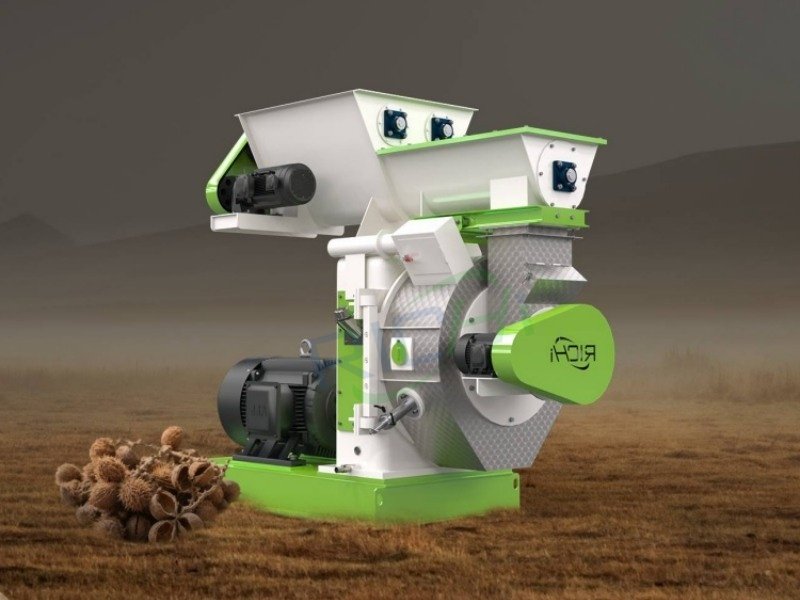
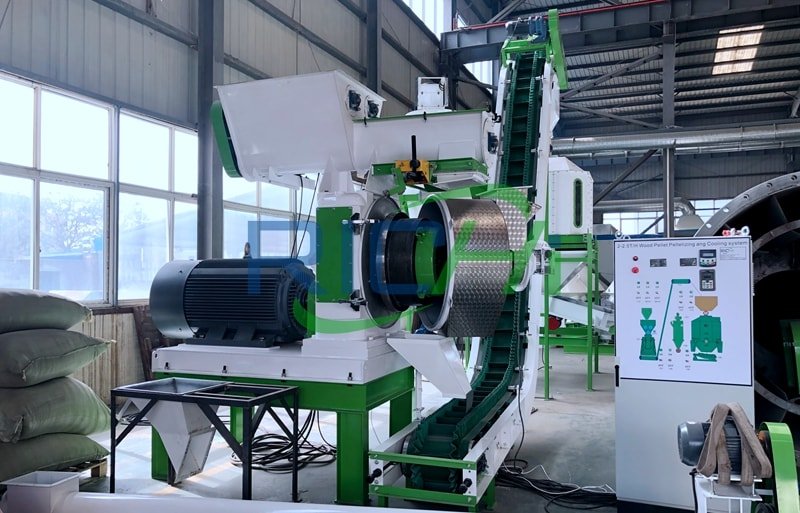
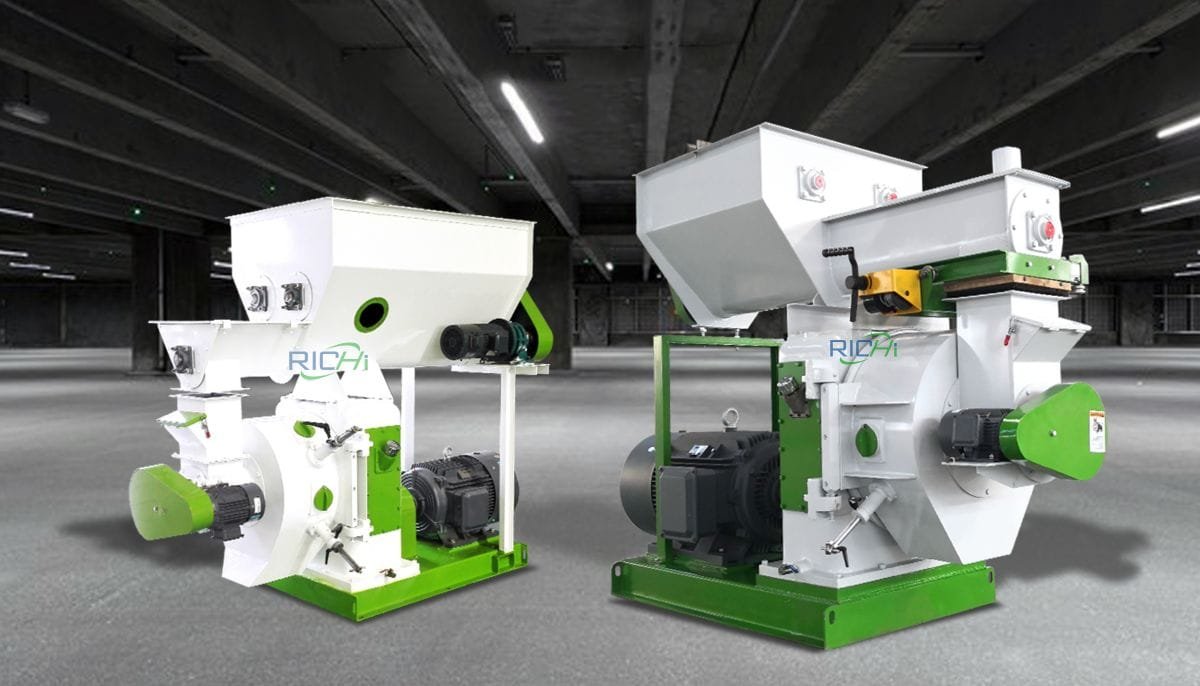
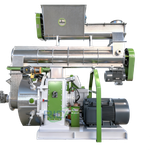
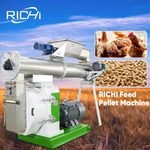
During pelletizing, prepared hemp particles are compressed through a die under pressure.
The die determines the approximate pellet diameter, while the cutting system controls pellet length.
The required machine capacity should be based on the available raw material and the intended operating schedule.
For example, a producer processing a few tons per day may not need the same machine configuration as a commercial biomass manufacturer operating continuously.
Future expansion should also be considered when selecting the initial capacity.
Can Bamboo Be Processed With Similar Equipment?
Bamboo is another fibrous biomass material that can be pelletized.
A bamboo pellet machine belongs to the same broad equipment category as hemp pelletizing equipment, but bamboo can differ in hardness, moisture, fiber structure, and particle characteristics.
Therefore, similar-looking machines do not automatically mean identical operating conditions.
If a producer plans to process both hemp and bamboo, material testing can help determine whether the same crushing, drying, and pelletizing configuration can handle both feedstocks efficiently.
Cooling Is Part of the Production Process
Fresh biomass pellets leave the pellet mill hot.
A cooling machine reduces their temperature and helps stabilize the pellets before screening and storage.
The screening stage removes fines and broken pieces. Depending on the production system, suitable fines can be returned to the pellet mill.
For small plants, compact cooling and screening equipment may be sufficient.
For larger plants, continuous conveying can connect these stages automatically.
Storage Should Be Considered Early
Pellet storage should not be treated as an afterthought.
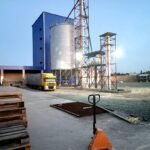
Finished biomass pellets can absorb moisture when exposed to humid conditions. A dry warehouse or covered storage area helps protect the product.
The required storage capacity depends on production volume, transportation frequency, and whether the pellets are consumed locally or sold to external customers.
For seasonal hemp production, additional storage may be necessary to maintain production throughout periods when fresh raw material is unavailable.
What Does a Typical Process Look Like?
A practical hemp pellet project may follow:
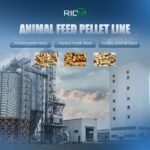
Hemp Residues → Cutting → Crushing → Drying if Required → Pelletizing → Cooling → Screening → Storage → Packing
The exact configuration can be simplified or expanded according to production requirements.
A small project may use manual packing and limited conveying, while a commercial plant can include automatic feeding, storage silos, dust collection, and automatic packaging.
What Information Is Needed for a Project Design?
A supplier normally needs:
- Hemp material type
- Moisture content
- Daily raw-material quantity
- Desired pellet diameter
- Required output
- Electricity specification
- Factory dimensions
- Planned operating hours
Photos or samples of the hemp material can make the equipment recommendation more precise.
The pellet maker machine should be selected only after these factors have been considered because its capacity and configuration need to match the surrounding preparation and cooling equipment.
A practical hemp biomass project is therefore a complete process rather than a single machine purchase. Proper raw-material preparation, balanced capacity, moisture control, and suitable storage can make the production system easier to operate and expand. Learn more here about biomass pellet equipment and production-line planning.
Related Post: https://pelletizerequipment.com/leaf-pellet-mill/