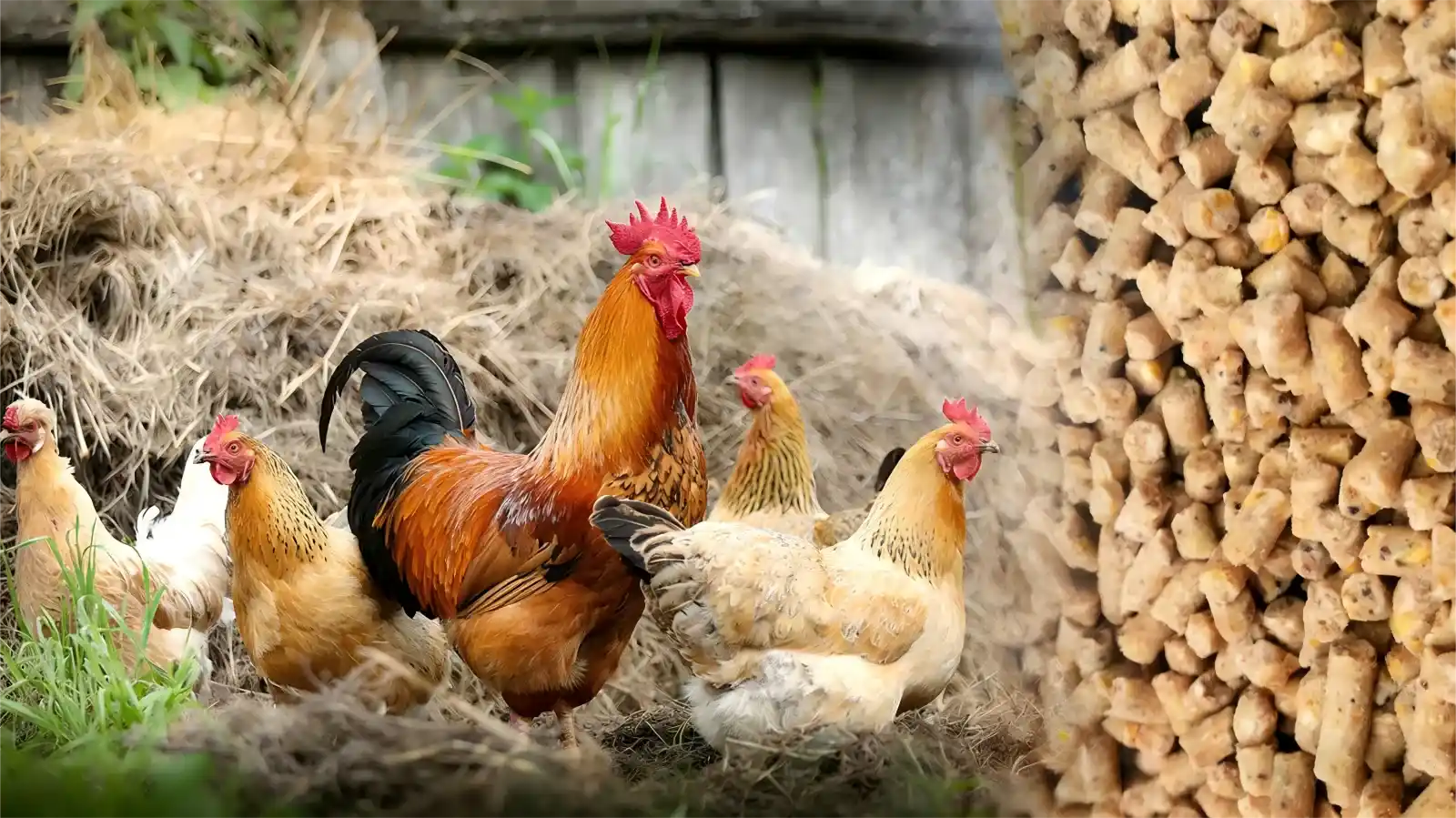




Small-scale poultry farming has become increasingly popular among farmers who want to reduce feed costs, improve feed quality, and make better use of locally available agricultural ingredients. Instead of purchasing all poultry feed from commercial suppliers, farmers can produce their own pellets from ingredients such as corn, wheat, soybean meal, rice bran, wheat bran, sorghum, and other suitable feed materials.
Making poultry feed pellets on a small scale does not necessarily require a large industrial factory. With the right equipment, a reasonable formula, and a well-organized process, a farmer or small feed producer can establish a compact poultry feed production line that is capable of producing consistent feed for broilers, layers, chicks, ducks, and other poultry.
A small-scale production system normally includes raw material preparation, grinding, weighing, mixing, pelleting, cooling, screening, and packaging. The equipment can be selected according to the required capacity, available space, raw materials, pellet size, and investment budget.
This article explains how to make poultry feed pellets on a small scale, what equipment is required, how the production process works, and what factors should be considered when setting up a small poultry feed production business.
1. Why Make Poultry Feed Pellets on a Small Scale?
There are several reasons why farmers choose to produce poultry feed themselves.
Lower Feed Costs
Feed is one of the largest operating costs in poultry farming. Purchasing commercial feed can be expensive, especially when the farm is located far from feed factories.
Producing feed locally allows farmers to purchase ingredients in larger quantities when prices are favorable.
Better Control of Feed Ingredients
A farmer can select the raw materials used in the formula and adjust the ingredients according to the nutritional requirements of the birds.
Reduced Feed Waste
Pellets are generally easier to handle than loose mash feed. They can reduce ingredient separation and make feeding more convenient.
Better Use of Local Resources
Farmers may have access to locally produced corn, wheat, rice bran, soybean meal, or other agricultural by-products.
Flexible Production
A small-scale feed producer can make different feed formulas according to the poultry species and growth stage.
For example, the same production system may produce broiler starter feed, grower feed, layer feed, or duck feed by changing the formula and pellet specifications.
2. What Poultry Can Be Fed with Homemade Pellets?
A small-scale poultry feed production system can be used for different birds.
Common applications include:
- Broiler chickens
- Layer chickens
- Chicks
- Ducks
- Geese
- Turkeys
- Quail
- Breeding poultry
The basic production process is similar, but the formula and pellet size should be adjusted according to the target bird.
For example, chicks generally require smaller feed particles than mature chickens. Broilers require formulas designed for efficient growth, while laying hens require appropriate nutrients for egg production, including adequate calcium.
Therefore, the equipment may remain largely the same while the feed formula and pellet specifications change.
3. Ingredients Needed for Small-Scale Poultry Feed
The ingredients used in poultry feed depend on the nutritional requirements of the birds and local availability.
Common energy ingredients include:
- Corn
- Wheat
- Sorghum
- Barley
- Rice
Common protein ingredients include:
- Soybean meal
- Rapeseed meal
- Sunflower meal
- Peanut meal
- Fish meal
Other ingredients may include:
- Wheat bran
- Rice bran
- Vegetable oil
- Limestone
- Dicalcium phosphate
- Salt
- Vitamin premix
- Mineral premix
- Amino acids
- Other approved feed additives
The formula should be developed according to the poultry species, age, production stage, and nutritional requirements.
Farmers should avoid simply combining ingredients based on availability. A balanced feed formula is essential for healthy poultry growth and production.
4. Determine Your Production Capacity
Before buying equipment, determine how much feed you need to produce.
For example, a small farm may only require several hundred kilograms of feed per day, while a small commercial feed business may need several tons per day.
Production capacity affects the selection of:
- Crusher
- Mixer
- Pellet mill
- Cooler
- Screener
- Conveyor
- Packaging machine
For very small farms, some operations can be performed manually or with compact machines.
For larger small-scale farms, a semi-automatic or fully automatic poultry feed production line may be more appropriate.
Choosing the capacity based on actual demand helps avoid unnecessary investment.
5. Basic Small-Scale Poultry Feed Production Process
The basic process can be summarized as:
Raw Material Receiving → Cleaning → Crushing → Batching → Mixing → Conditioning → Pelleting → Cooling → Screening → Packaging
Not every small farm needs every machine.
For example, a simple farm-based system might use:
Crusher → Mixer → Pellet Mill → Cooler → Screener
A more advanced system can include automatic batching, conveyors, steam conditioning, and automatic packaging.
The production line should be designed according to the actual requirements of the farm.
6. Raw Material Cleaning
Before grinding, raw materials should be cleaned.
Corn, wheat, and other grains may contain:
- Stones
- Soil
- Metal pieces
- Dust
- Plant residues
- Other foreign materials
A small vibrating screen or rotary screener can remove larger impurities.
A magnetic separator can remove ferrous metal particles.
Cleaning protects the crusher and pellet mill while also improving feed hygiene.
For small farms with limited production, simple manual pre-cleaning may sometimes be sufficient, but mechanical cleaning becomes more useful as production volume increases.
7. Grinding the Ingredients
Most cereal grains should be reduced to an appropriate particle size before mixing and pelleting.
A hammer mill is commonly used for this purpose.
The hammer mill breaks corn, wheat, sorghum, and other materials into smaller particles.
Proper grinding can improve:
- Mixing uniformity
- Pellet formation
- Pellet durability
- Feed consistency
However, the material should not necessarily be ground as finely as possible.
Excessively fine grinding can increase electricity consumption and dust generation.
The appropriate particle size depends on the poultry species, bird age, feed formula, and pellet diameter.
8. Weighing and Batching
After grinding, the ingredients should be weighed according to the feed formula.
In a very small operation, ingredients may be weighed manually using scales.
As production increases, an automatic batching system can be introduced.
Accurate batching is particularly important for ingredients used in small quantities, such as vitamins, minerals, amino acids, and additives.
An inaccurate formula can lead to inconsistent nutrient levels and affect poultry performance.
For commercial small-scale production, automated weighing can improve accuracy and reduce labor.
9. Mixing the Feed
After weighing, all ingredients are transferred to a mixer.
The purpose of mixing is to distribute the ingredients evenly throughout the feed.
A small horizontal mixer is often suitable for small feed plants.
Depending on the equipment configuration, the mixer may process several hundred kilograms or more per batch.
Good mixing is especially important when the formula contains small quantities of micro-ingredients.
The mixer should provide a uniform mixture without requiring excessive mixing time.
https://pelletisingmachine.com/animal-feed-hammer-mill
10. Additives and Liquid Ingredients
Some poultry feed formulas may contain liquid ingredients such as vegetable oil.
Oil can increase the energy density of feed and improve certain physical characteristics.
However, excessive oil can make pelleting more difficult because it may reduce the friction required for compression.
Therefore, liquid ingredients should be added according to the formula and production process.
For larger small-scale production lines, a liquid addition system can provide more accurate dosing.
11. Conditioning Before Pelleting
Conditioning is an important step when producing high-quality poultry feed pellets.
The mixed feed is exposed to heat and moisture, usually through steam.
The purpose is to soften the feed and improve its binding characteristics.
Proper conditioning can:
- Improve pellet durability
- Reduce fines
- Improve pellet appearance
- Increase pellet mill capacity
- Reduce energy consumption
For very small farms, steam conditioning may not always be necessary, particularly when using a simple flat-die pellet machine.
However, as production capacity increases, conditioning becomes increasingly useful for maintaining consistent pellet quality.
12. Choosing a Pellet Machine
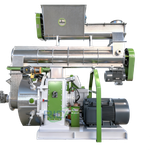
The pellet mill is the core machine in a small-scale poultry feed production system.
Two common options are flat-die pellet mills and ring-die pellet mills.
Flat-Die Pellet Mill
Flat-die pellet mills are commonly used for small-scale production.
Their advantages can include:
- Compact structure
- Simple operation
- Lower investment
- Easy maintenance
- Convenient installation
They can be suitable for farms producing relatively small quantities of feed.
Ring-Die Pellet Mill
Ring-die pellet mills are generally more suitable for larger production capacities.
They can provide higher throughput and are commonly used in commercial feed factories.
When selecting a pellet mill, consider:
- Required capacity
- Pellet diameter
- Feed formula
- Motor power
- Operating hours
- Maintenance requirements
- Budget
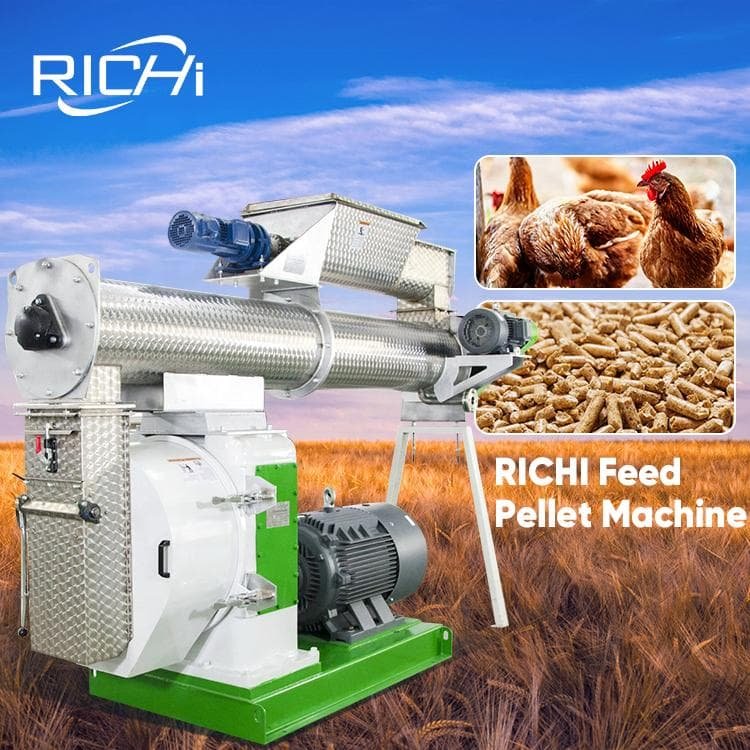
(Learn about RICHI chicken feed pellet making machine )
13. Select the Correct Pellet Diameter
Pellet diameter should be selected according to the target poultry.
Young chicks need smaller feed particles because of their small beaks and digestive systems.
Older broilers can consume larger pellets.
Layer and breeder feed may use different specifications depending on the feeding system.
The pellet diameter is primarily determined by the die.
Common pellet sizes may include several millimeters, but the appropriate specification should be selected according to actual bird requirements and feeding practices.
14. Pelletizing the Feed
Once the feed mixture is properly prepared, it enters the pellet mill.
The basic process is:
Prepared Feed → Compression → Die Extrusion → Cutting → Finished Pellets
Inside the pellet mill, pressure forces the feed through holes in the die.
The extruded material is then cut into short cylindrical pellets.
The density and durability of the pellets are affected by:
- Raw material composition
- Particle size
- Moisture
- Conditioning
- Die compression
- Roller adjustment
- Machine operating conditions
Therefore, pelletizing should be considered part of a complete process rather than an isolated operation.
15. Cooling the Pellets
Fresh pellets leave the pellet mill at an elevated temperature.
They also contain moisture added during conditioning.
Cooling is necessary before long-term storage.
For small production volumes, pellets may sometimes be spread out in a clean, well-ventilated area for natural cooling.
However, this method requires more labor and provides less precise control.
For a commercial small-scale poultry feed production line, a mechanical pellet cooler is a better option.
A counterflow cooler can remove heat and moisture efficiently while preparing the pellets for screening and packaging.
16. Screening the Finished Pellets
After cooling, the pellets should be screened.
The screening machine separates:
- Qualified pellets
- Fines
- Broken pellets
- Oversized material
Fines can often be returned to the pellet mill for reprocessing.
Screening improves the consistency and appearance of the finished product.
For very small farms, manual screening may be possible.
As production increases, a vibrating screen or rotary screener can significantly reduce labor.
17. Crumbling Pellets for Chicks
Chick starter feed often requires smaller particles than standard poultry pellets.
A feed crumbler can be installed after the cooler.
The basic process is:
Pelleting → Cooling → Crumbling → Screening
The crumbler breaks larger pellets into smaller pieces.
This allows a small feed production line to produce both standard pellets for older birds and crumbles for young chicks.
The crumbler should be properly adjusted to prevent excessive fines.
18. Packaging Small-Scale Poultry Feed
The final step is packaging.
For a very small farm, feed can be manually weighed and packed into bags.
For a small commercial feed business, an automatic or semi-automatic packaging machine can improve efficiency.
Packaging equipment can perform:
- Weighing
- Filling
- Bag clamping
- Sealing
- Counting
Common packaging sizes depend on local market requirements.
Small bags may be convenient for retail customers, while larger bags may be more suitable for farms purchasing feed in bulk.
19. How to Improve Pellet Quality on a Small Scale
Small-scale producers should pay attention to several factors.
Use Consistent Raw Materials
Stable ingredient quality makes it easier to maintain consistent pellet production.
Control Moisture
Excessively dry or wet feed can create pelleting problems.
Grind Properly
Use a suitable particle size instead of simply grinding as finely as possible.
Mix Thoroughly
Uniform mixing is essential for nutritional consistency.
Maintain the Pellet Mill
Regularly inspect the die, rollers, bearings, and other wear components.
Cool Properly
Do not package hot pellets immediately.
Minimize Mechanical Damage
Avoid excessive dropping and rough handling.
These relatively simple practices can significantly improve finished pellet quality.
20. Small-Scale Poultry Feed Production Line Configuration
A practical small-scale poultry feed production line may include the following equipment:
| Process | Equipment |
|---|---|
| Cleaning | Vibrating screen |
| Grinding | Hammer mill |
| Batching | Electronic weighing system |
| Mixing | Feed mixer |
| Conditioning | Steam conditioner |
| Pelleting | Small pellet mill |
| Cooling | Pellet cooler |
| Screening | Vibrating screen |
| Crumbling | Feed crumbler |
| Packaging | Semi-automatic packing machine |
The actual configuration can be simplified according to production capacity.
For example, a farm producing less than one ton per hour may not require a large automatic batching system or fully automatic packaging equipment.
21. Compact Layout for Small Farms
Factory space can be a major limitation for small-scale poultry producers.
A compact layout should minimize unnecessary material transportation.
A typical material flow can be arranged as:
Raw Materials → Crusher → Mixer → Pellet Mill → Cooler → Screener → Packing
Machines should be positioned according to the production sequence.
This reduces:
- Conveyor length
- Labor requirements
- Material handling
- Factory space requirements
Vertical layouts can also be considered when floor space is limited.
22. Manual, Semi-Automatic, or Fully Automatic?
Small-scale feed producers can choose among different automation levels.
Manual Production
Suitable for very small farms.
Operators manually weigh ingredients, transfer materials, operate machines, and package feed.
The investment is relatively low but labor requirements are higher.
Semi-Automatic Production
This is often a practical choice for growing farms.
Some processes are automated while others remain manually controlled.
It provides a balance between investment and productivity.
Fully Automatic Production
A fully automatic system can control batching, mixing, pelleting, cooling, screening, and packaging.
It is more suitable for commercial feed businesses with higher production volumes.
The correct choice depends on the production target and investment plan.
23. How Much Does a Small-Scale Poultry Feed Plant Cost?
There is no single price for a small poultry feed production system.
Investment depends on:
- Production capacity
- Number of machines
- Automation level
- Pellet mill type
- Raw material handling system
- Cooling requirements
- Packaging system
- Factory building
- Electrical installation
- Transportation
- Installation
A simple farm-based system will cost considerably less than a fully automated commercial plant.
When preparing a budget, buyers should consider not only machine purchase costs but also installation, electrical systems, spare parts, labor, raw materials, and future maintenance.
24. How to Reduce Investment
Small producers can reduce their initial investment by building the production system in stages.
For example, the first stage might include:
Crusher → Mixer → Pellet Mill → Cooler
As production grows, the farmer can add:
- Automatic batching
- Conveyors
- Screening machine
- Crumbler
- Automatic packaging machine
- Larger storage bins
This approach allows the factory to expand according to market demand.
However, the initial factory layout should leave sufficient space for future equipment.
25. Common Mistakes in Small-Scale Feed Production
Several mistakes should be avoided.
Buying a Machine Based Only on Price
The cheapest machine may not provide the desired capacity or durability.
Ignoring the Feed Formula
Pellet production should start with a nutritionally appropriate formula.
Using Poor Raw Materials
Low-quality ingredients can affect both poultry performance and pellet quality.
Overloading the Pellet Mill
Operating beyond the machine’s recommended capacity can increase wear and reduce pellet quality.
Poor Cooling
Hot pellets should not be immediately sealed in bags.
Neglecting Maintenance
Worn dies, rollers, bearings, and other components can reduce efficiency.
Poor Factory Layout
Unnecessary material handling increases labor and production costs.
26. Maintenance of a Small Poultry Feed Production Line
Regular maintenance is important even for a small production system.
Operators should inspect:
- Pellet mill die
- Pressure rollers
- Hammer mill hammers
- Mixer paddles
- Bearings
- Motors
- Conveyors
- Cooler
- Screener
Lubrication should be performed according to the equipment manufacturer’s requirements.
Wear parts should be replaced before excessive wear causes major production problems.
A simple maintenance schedule can help prevent unexpected downtime.
27. Safety Considerations
Feed production involves rotating machinery, electrical systems, dust, heat, and moving materials.
Operators should follow proper safety procedures.
Important measures include:
- Install machine guards
- Provide emergency stop devices
- Keep electrical systems protected
- Control dust
- Maintain clean working areas
- Use appropriate personal protective equipment
- Train operators before operation
- Never open machines while they are running
Dust control is particularly important around hammer mills and other equipment that generates fine particles.
28. Why Choose a Complete Small-Scale Production Solution?
Buying individual machines without considering their compatibility can create problems.
For example, a high-capacity pellet mill connected to a low-capacity mixer will not operate efficiently.
Similarly, insufficient cooling capacity can become a bottleneck after pelleting.
A complete production system considers:
- Raw material characteristics
- Feed formulas
- Production capacity
- Equipment matching
- Material flow
- Factory layout
- Automation
- Future expansion
Therefore, even a small farm can benefit from professional production line design.
29. RICHI Small-Scale Poultry Feed Production Solutions
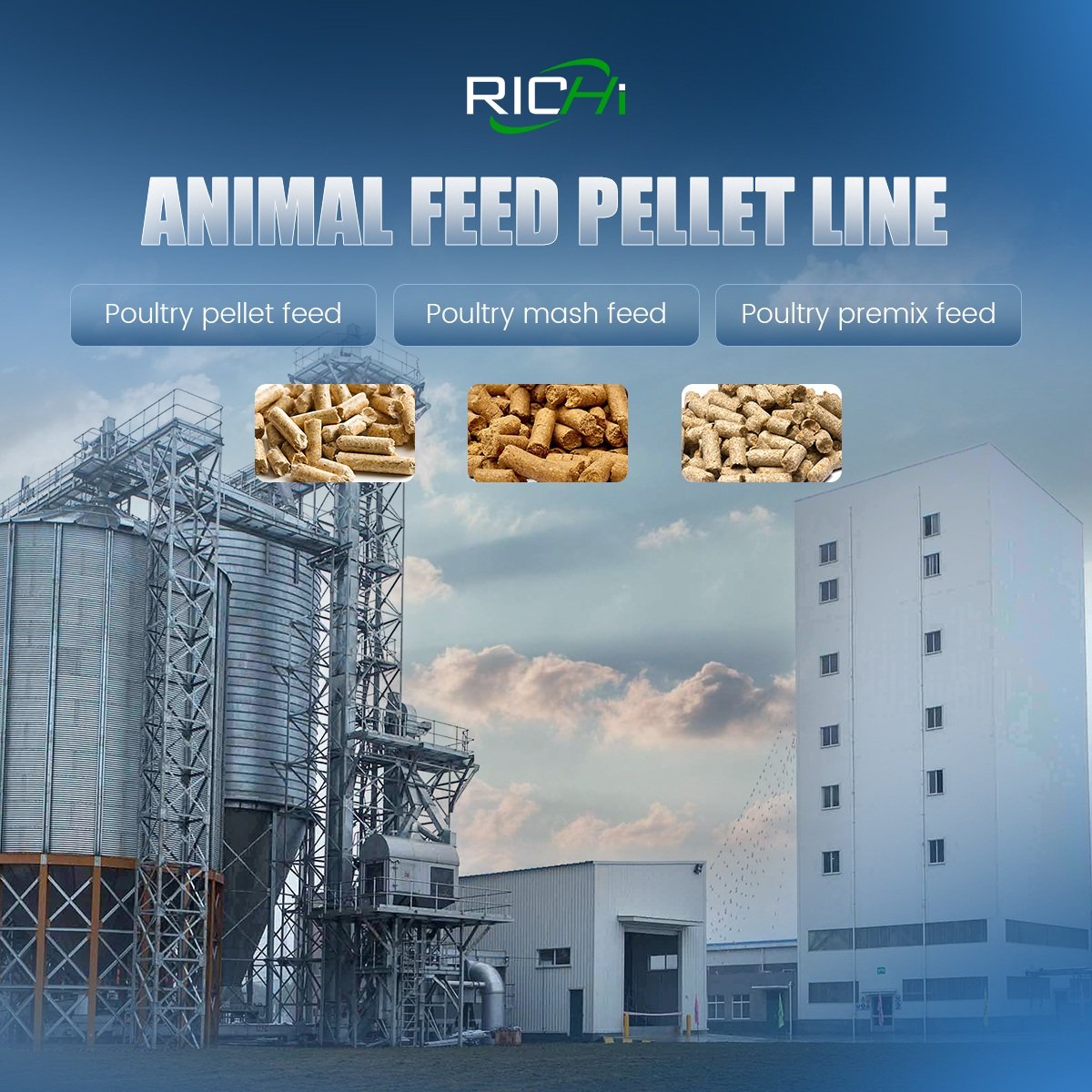
RICHI Manufacture provides customized poultry feed production equipment and turnkey solutions for farms and small feed manufacturers.
Depending on the customer’s requirements, a small-scale poultry feed production line can be configured with:
Raw Material Cleaning → Crushing → Batching → Mixing → Conditioning → Pelletizing → Cooling → Screening → Crumbling → Packaging
The equipment configuration can be adjusted according to:
- Target capacity
- Raw materials
- Poultry species
- Feed formulas
- Pellet diameter
- Factory space
- Automation level
- Investment budget
For farms starting with relatively small production, a compact system can be designed to reduce unnecessary equipment investment while maintaining room for future expansion.
RICHI can also provide turnkey services covering process design, equipment manufacturing, transportation, installation, commissioning, operator training, spare parts supply, and after-sales technical support.
This allows customers to obtain a coordinated production system instead of purchasing unrelated machines from different suppliers.
Conclusion
Making poultry feed pellets on a small scale is a practical way for farmers and small feed businesses to improve feed management, reduce dependence on commercial feed suppliers, and make better use of locally available ingredients.
The basic process is relatively straightforward:
Cleaning → Grinding → Batching → Mixing → Conditioning → Pelleting → Cooling → Screening → Packaging
The exact equipment configuration depends on the production capacity and product requirements. A very small farm may only need a crusher, mixer, pellet mill, and basic cooling system, while a growing commercial operation may require a more complete poultry feed production line with automatic batching, steam conditioning, cooling, screening, crumbling, conveying, and packaging.
The most important factors are not simply the size or price of individual machines. Producers should consider the entire production process, including feed formulation, raw material quality, particle size, moisture, pellet diameter, equipment matching, maintenance, and future expansion.
For farmers planning to increase production gradually, a modular approach can be especially useful. Start with the essential equipment, establish stable production, and add automation and auxiliary equipment as demand grows.
With appropriate equipment and process design, even a compact poultry feed plant can produce consistent, durable, and nutritionally balanced pellets for broilers, layers, chicks, ducks, and other poultry while creating a more efficient and controllable feed production system.