



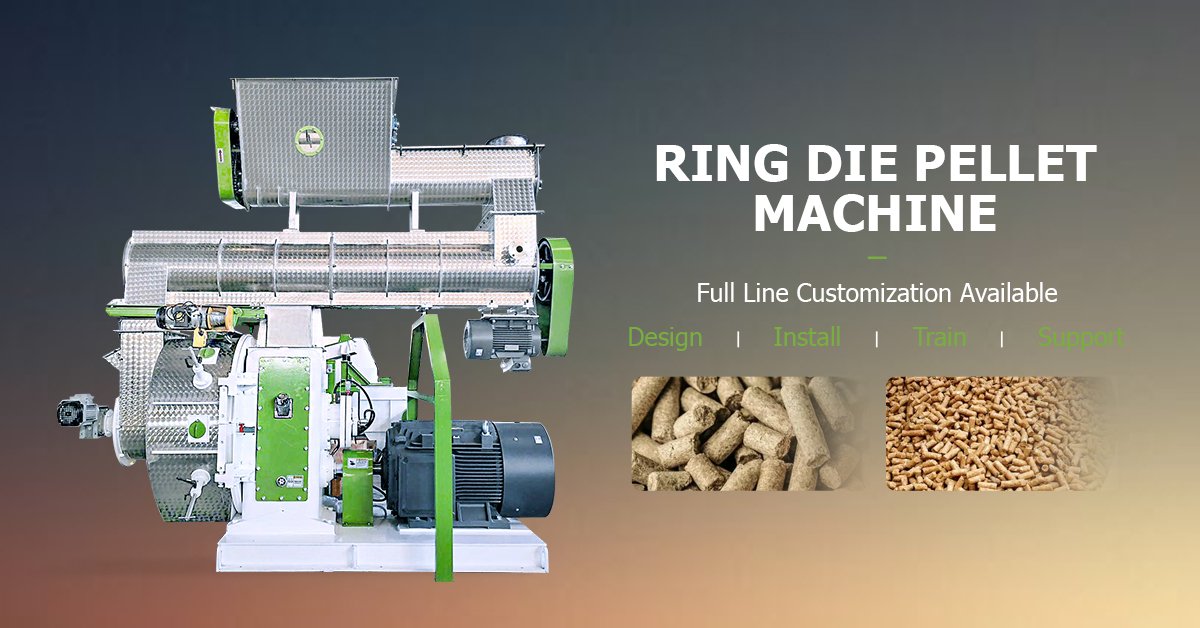
Agricultural residues are becoming increasingly important as businesses look for practical ways to improve resource utilization. Materials such as hay, wheat straw, rice straw, corn stalks, and bagasse are often available in large quantities, yet their low bulk density and seasonal nature can make them difficult to store and transport.
Pelletizing provides one way to address these challenges. By compressing prepared fibrous materials into dense cylindrical products, agricultural businesses can improve handling efficiency and create a more standardized material for livestock feeding, biomass applications, bedding, or other uses.
However, the quality of the final pellet depends on much more than the pelletizing machine itself. Raw-material preparation, moisture management, particle size, production capacity, cooling, screening, and storage all have a role.
Why Do Agricultural Residues Need Better Processing?
A field residue may have little commercial value when it is scattered across farmland, but the same material can become more useful after collection and processing.
Consider loose wheat straw. It has a low bulk density and takes up significant space. Moving it over long distances can therefore be expensive compared with transporting a denser product.
Pelletization changes the physical characteristics of the material.
Instead of dealing with long, irregular fibers, the producer obtains compact pellets with a more uniform size and shape. These pellets can be moved by conveyors, stored in bins, packed into bags, or transported in bulk.
The process can therefore create value not only through the pellet itself but also through improved logistics.
The Real Starting Point: Raw Material Assessment
Before planning a pellet project, the first question should be:
What raw material is actually available?
This sounds simple, but agricultural residues can vary significantly from one region, farm, or harvest to another.
A useful assessment should cover:
- Material type
- Moisture content
- Fiber length
- Bulk density
- Ash content
- Foreign material
- Seasonal availability
- Daily supply
- Annual supply
- Intended pellet application
This information determines much of the downstream equipment configuration.
For example, a dry, short-fiber material may require a different preparation system from wet, long-stem straw.
The best equipment selection process therefore begins with material testing rather than a machine catalog.
Hay: A Flexible but Variable Feedstock
Hay is commonly associated with livestock feeding, but its physical properties can differ widely.
Alfalfa hay may contain a high proportion of leaves, while mature grass hay may contain more coarse stems. Mixed forage can have an even broader range of characteristics.
These differences affect grinding, feeding, compression, and pellet durability.
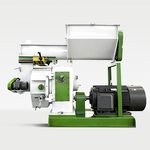
A hay pellet machine can be used to compress suitable hay into uniform pellets, but the machine should be matched to the actual forage being processed.
For livestock applications, the formulation also matters. A producer may pellet hay alone or combine it with other ingredients to create a more complete feed product.
The production goal should therefore be established before selecting the equipment.
Wheat Straw: More Than a Waste Material
Wheat straw is generated in large quantities in many agricultural regions. Traditionally, some of it may be left in fields, burned where regulations permit, incorporated into soil, or used for livestock bedding.
Pelletizing introduces another possibility.
A medium-capacity system can convert prepared wheat straw into dense pellets that are easier to handle and transport.
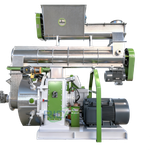
For example, a 2-3 T/H wheat straw pellet machine for sale may be appropriate for an operation with a stable local supply of straw and moderate production requirements.
But the capacity should not be selected simply because the number looks attractive.
If the factory only has sufficient raw material for several hours of operation per day, a larger machine may not provide better economics. Utilization is often more important than maximum theoretical capacity.
Rice Straw Requires Its Own Evaluation
Rice straw is another abundant agricultural residue, particularly in rice-growing regions.
Although it can be pelletized, it should not automatically be treated as identical to wheat straw.
Its moisture, ash characteristics, fiber structure, and harvesting method can affect processing performance.
For a commercial operation, a 3-4 T/H rice straw pellet machine for sale may be considered when local residue availability supports continuous production.
The project should also evaluate the upstream collection system. A pellet plant cannot operate efficiently if raw material delivery is inconsistent.
This is an important distinction between machine capacity and plant capacity.
The machine may technically produce several tons per hour, but the entire plant is limited by the slowest or least reliable stage.
Why Grinding Is More Important Than It Looks
Fibrous residues are not naturally uniform.
One bale of hay may contain long stems, leaves, and compacted sections. Straw can contain stalks of different lengths. These materials must be made sufficiently uniform before pelletizing.
Grinding serves several purposes:
- Reduces excessive fiber length.
- Improves feeding consistency.
- Creates a more uniform material structure.
- Helps stabilize pellet formation.
- Makes automated conveying easier.
However, grinding also consumes energy.
The objective is therefore not to create the smallest possible particles. It is to produce particles suitable for the intended pellet specification and equipment.
This is why hammer mill selection and screen configuration should be considered alongside pellet mill selection.
Moisture Management: A Hidden Driver of Pellet Quality
Moisture is one of the variables that can make or break a pellet production process.
A material that is too wet may resist proper compression and create unstable operation. A material that is too dry may generate excessive dust or fail to bind effectively under certain conditions.
The ideal processing condition depends on the raw material and production system.
For this reason, moisture should be monitored rather than estimated by appearance.
A complete system may include drying or moisture-conditioning equipment when necessary. However, drying should be based on actual material conditions.
If incoming straw is already sufficiently dry, unnecessary drying adds operating cost without creating corresponding benefits.
When Is Drying Necessary?
Drying becomes particularly important when residues are harvested or received with excessive moisture.
The appropriate drying method depends on:
- Initial moisture
- Final target moisture
- Material structure
- Required throughput
- Available heat source
- Local climate
- Available floor space
A high-capacity industrial line may require continuous mechanical drying, while a smaller farm operation may use naturally dried material and avoid an industrial dryer altogether.
This is another reason why equipment configuration should be customized around the raw material.
Pellet Density and Transportation
One of the strongest arguments for pelletizing agricultural residues is improved logistics.
Loose straw is bulky. Transporting it means moving a large volume of air along with the actual material.
Pellets are much denser and more uniform.
This can improve:
- Truck utilization
- Warehouse efficiency
- Conveyor performance
- Automated feeding
- Packaging
- Long-distance transportation
The economic value of densification becomes especially noticeable when the raw-material source and final market are separated by significant distances.
In some cases, pelletizing can make a previously uneconomical transportation route more practical.
What Does a Complete Processing Flow Look Like?
A typical agricultural residue pellet line may follow this sequence:
Raw material receiving → cleaning → grinding → drying or conditioning → conveying → pelletizing → cooling → screening → packaging
Not every project requires every stage.
For example, dry hay may not require intensive drying. A small farm may not need automatic packaging. A biomass facility may require different screening and storage arrangements from a livestock feed producer.
The system should therefore be modular.
This is where Richi Machinery can be relevant when evaluating different equipment combinations for agricultural residue processing.
Rather than selecting machines independently, buyers can consider how each stage connects to the next.
Why Cooling Should Never Be an Afterthought
Pellets leaving the pellet mill are hot because compression generates friction.
Fresh pellets can also be relatively soft immediately after production.
Cooling helps stabilize the product and prepares it for downstream screening and storage.
For larger facilities, the cooler must be matched to the pellet mill’s output.
If the cooling stage cannot handle the production rate, it can become a bottleneck even if the pellet mill itself is capable of higher output.
The same principle applies to screening and packaging.
A production line is only as efficient as its overall material flow.
Screening Improves Product Consistency
After cooling, pellets can contain fines or broken pieces.
Screening separates these unwanted fractions from the finished pellets.
The recovered fines do not necessarily have to become waste. Depending on the product and process, they may be returned to the production system.
This creates an opportunity to improve material utilization while maintaining a cleaner finished product.
For commercial applications, screening can also improve packaging consistency because the final product contains a more predictable proportion of acceptable pellets.
Can One Factory Process Multiple Residues?
In many cases, yes, but flexibility comes with technical requirements.
A factory processing both hay and straw may need to adjust grinding parameters, moisture management, feeding rates, and pelletizing conditions when switching materials.
This is not necessarily a disadvantage.
For regions where agricultural residues change throughout the year, a flexible plant may achieve higher annual utilization than a system dedicated to one material.
For example:
Spring: grass or forage materials
Summer: hay
Autumn: wheat straw
Winter: stored residues or purchased feedstock
The exact pattern depends on the agricultural calendar of the region.
The important point is to design the plant around the local supply cycle.
Why Capacity Should Be Based on Supply
Capacity planning is often misunderstood.
Suppose a factory has access to 30 tons of suitable residue per day. A machine rated at 8 tons per hour may sound impressive, but running it for four hours already requires 32 tons of raw material before considering processing losses.
If the available supply cannot support that schedule, the machine may spend much of its time idle.
A better calculation is:
Available raw material ÷ planned operating hours = required practical capacity
Then add room for future expansion if the business expects supply or market demand to grow.
This approach usually produces a more realistic equipment specification.
Energy Efficiency Starts Before Pelletizing
Energy consumption is not determined only by the pellet mill motor.
Grinding, drying, conveying, cooling, dust collection, and packaging all contribute to total plant energy use.
Therefore, efficiency should be considered at the system level.
For example, avoiding excessive grinding can reduce electricity consumption. Using sufficiently dry raw material can reduce drying requirements. Optimizing conveyor layouts can reduce unnecessary material movement.
Small improvements at several stages can have a meaningful effect on annual operating costs.
What Should Buyers Compare Between Equipment Suppliers?
Price is important, but it should not be the only comparison factor.
Buyers should consider:
Raw-material compatibility: Has the equipment been used with similar materials?
Capacity: Is the quoted output realistic for the specific raw material?
Configuration: Are grinding, drying, cooling, screening, and conveying properly matched?
Die options: Can the machine produce the required pellet diameter?
Maintenance: Are wear parts accessible and replaceable?
Automation: Can the control system maintain stable operation?
Service: Is technical support available during installation and commissioning?
These questions can reveal significant differences between seemingly similar machines.
What Makes a Pellet Project Sustainable?
Sustainability is not simply about using agricultural waste.
A sustainable pellet project should also make economic and operational sense.
The raw material must be available at a reasonable cost. Energy consumption must be manageable. Equipment should operate reliably. Finished pellets need a viable application or market.
A project that requires expensive transportation, excessive drying, and low machine utilization may not be sustainable even if the raw material itself is technically free.
(Related Post: https://biomasspelletizer.com/corn-stalk-pellet-machine/)
The strongest projects typically have three things in common:
Reliable feedstock + suitable processing technology + clear product demand
When these three factors align, agricultural residue pelletizing becomes much more attractive.
Looking Beyond the Pellet Mill
The pellet mill remains the heart of a pelletizing line, but successful production depends on the entire system.
A good project begins with raw-material analysis and ends with a clear understanding of the final product.
For hay, the focus may be forage quality and pellet durability. For wheat or rice straw, material preparation and ash characteristics may receive greater attention. For bagasse, moisture management can become a major design factor.
This means there is no universal solution.
The most practical approach is to evaluate the material, define the application, estimate realistic capacity, and then build the equipment configuration around those requirements.
Agricultural residues have traditionally been viewed as leftovers from the primary production process. With appropriate technology, they can instead become useful inputs for a new value chain.
Pelletizing does not eliminate every challenge associated with agricultural residues, but it can make these materials significantly easier to handle, store, transport, and utilize.
For producers considering such a project, the most important question is not simply “Which pellet machine should we buy?”
A better question is:
“What combination of preparation, pelletizing, cooling, storage, and handling equipment can turn our local residue supply into a reliable commercial product?”
That broader perspective is often the foundation of a more efficient and adaptable pellet production project.